


European RV Road Trips
Meili Wyss • Last updated: October 19, 2026 • 13 min read
Dreaming of a road trip through Europe, or would you rather explore North America closer to home? Some of the world’s best road trips start just a few hours from your front door, while others are worth the flight across the Atlantic. We’ve picked the 5 best RV routes in Europe and the 5 best in North America, from Norway’s fjords, Tuscany, and Andalusia to the Pacific Coast, the Grand Canyon, and the Florida Keys.
Every route starts at a roadsurfer rental station, so you can pick up your RV and hit the road. For each route, you’ll find a day-by-day itinerary, trip length, distance, the best time to go, and our top tip.
In Europe, our top five are Norway’s fjords, Brittany, Tuscany, Lake Garda, and Andalusia. In North America, the Pacific Coast from Seattle to San Francisco, the route to the Grand Canyon and Monument Valley, Colorado, the Canadian Rockies, and the Overseas Highway to Key West lead the list. For most routes, plan 7 to 14 days on the road, plus travel days if you’re flying to Europe.
| Route | Start (roadsurfer station) | Length | Best time to go |
|---|---|---|---|
| Norway’s fjords | Bergen | 10–14 days | June–August |
| Brittany | Nantes | 10–12 days | May–September |
| Tuscany | Florence | 7–9 days | April–June, Sept.–Oct. |
| Lake Garda | Bergamo | 7 days | May, June, September |
| Andalusia | Seville | 10–12 days | March–May, Sept.–Oct. |
| Pacific Coast: Seattle – San Francisco | Seattle | 10–14 days | June–September |
| Grand Canyon & Monument Valley | Phoenix | 14 days | March–May, Sept.–Nov. |
| Colorado | Denver | 12–13 days | June–September |
| Canadian Rockies | Calgary | 7–10 days | June–September |
| Overseas Highway | Miami | 7 days | December–April |
Fjords, sea cliffs, vineyards, and Moorish palaces: these five routes show Europe at its most varied, and every one of them starts at a roadsurfer station in a city with its own airport. Distances are short, so you can wake up by a fjord or in a medieval town and be somewhere completely different by dinner. We list distances in miles, but road signs and speed limits in Europe are in kilometers (1 mile is about 1.6 km).
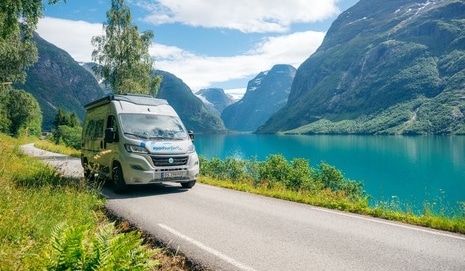
An RV trip through Norway feels like driving through a picture book. This loop from Bergen takes you along two UNESCO-listed fjords, over the highest mountain pass road in Northern Europe, and up the country’s most famous switchback road. The ferries across the fjords aren’t a detour: they’re often the best moments of the trip.
At a glance:

Your itinerary:
Good to know: Mountain roads like the Trollstigen can close on short notice, even in summer, for rockfall work or bad weather. Check the current status with Statens vegvesen, the Norwegian Public Roads Administration, before you set off.
Sea cliffs, lighthouses, crêpes, and salt marshes: Brittany is France’s wildest corner. If you explore Brittany by RV, the loop starts and ends at our Nantes station. In between, you drive all the way across the region, from the old town of Rennes to the “end of the world” near Brest, as Bretons call the far western tip of France.
At a glance:

Your itinerary:
Good to know: Unlike most French highways, Brittany’s expressways are toll-free. The difference between low and high tide on the coast is huge, so check the tide tables before you set out on a beach walk.
Cypress-lined roads, vineyards, and hilltop towns: an RV trip through Tuscany is the most delicious route on our list. Distances are short, so you’ll spend more time at the wine bar than behind the wheel.
At a glance:

Your itinerary:
Good to know: Almost every historic town center in Italy has a ZTL (zona a traffico limitato), a restricted traffic zone you can only enter with a permit. Cameras record every license plate. Park your camper van at an area di sosta, an RV parking area on the edge of town, and walk the last stretch.
Lake Garda, Italy’s largest lake, is the road trip for anyone who wants to drive less and see more. In the north, the mountains rise straight out of the water; in the south, beaches, vineyards, and resort towns are waiting for you. From our Bergamo station, it’s just over an hour to the southern shore and about two hours to Riva del Garda, where the loop begins.
At a glance:

Your itinerary:
Good to know: Campsites at Lake Garda are in high demand in July and August, when much of Europe is on summer vacation. Book campsites on the eastern shore early, or head for the quieter western side.
Flamenco, Moorish palaces, and whitewashed villages: Andalusia is Spain at its most Spanish. This road trip through Andalusia starts at our Seville station and takes you all the way to Europe’s only desert near Almería.
At a glance:

Your itinerary:
Good to know: Tickets for the Alhambra often sell out weeks in advance, so book them right after your camper van. In midsummer, temperatures inland climb above 104°F (40°C). You’ll have to drive back to Seville to return your camper, so plan your dates accordingly.
Our tip: In July and August, when many Europeans take their summer vacation, popular campsites at Lake Garda, in Tuscany, and on the Andalusian coast fill up fast. Travel in May, June, or September and you’ll get more space, milder temperatures, and often lower prices.
Prefer to stay closer to home? No transatlantic flight, no big time difference: in North America, the distances are longer, the campgrounds roomier, and the national parks simply huge. These five routes also start at roadsurfer stations, one of them across the border in Canada.
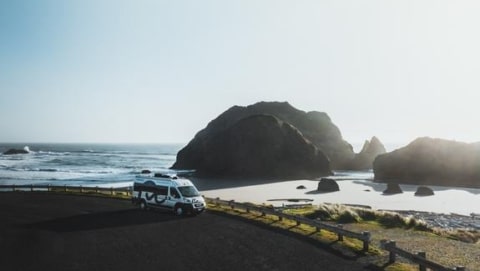
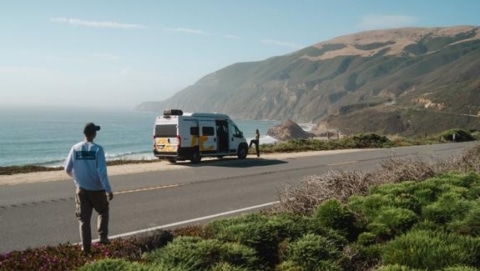
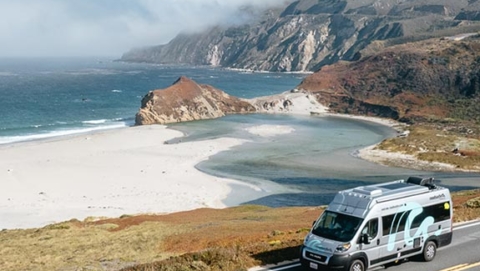
Rainforest, lighthouses, and the tallest trees on Earth: this route shows you a side of the West Coast that many travelers miss. From Seattle, you drive through Washington, along Oregon’s rugged coast, and through the redwood forests of Northern California all the way to San Francisco.
At a glance:

Your itinerary:
Good to know: This is a one-way route between two stations. You’ll see whether you can drop off in San Francisco when you book. If you have more time, keep heading south on the Pacific Coast Highway (Highway 1).
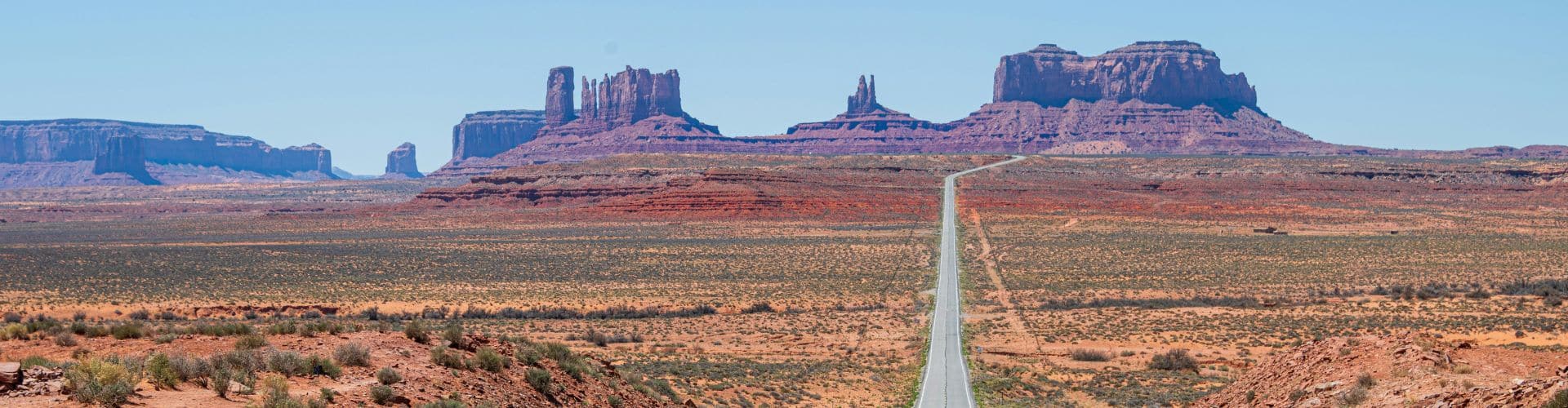
Red rock, wide-open spaces, and one of the most spectacular canyons on the planet: this loop feels like driving straight into a Western. It starts and ends at our Phoenix station.
At a glance:

Your itinerary:
Good to know: Monument Valley is on Navajo Nation land and isn’t a national park, so you pay admission there separately. In summer, temperatures in Phoenix often top 104°F (40°C).
Colorado is our insider tip among the US routes: alpine lakes above 9,800 feet, Old West towns, and the tallest sand dunes in North America. The loop starts and ends at our Denver station.
At a glance:

Your itinerary:
Good to know: In summer, Rocky Mountain National Park usually requires a timed-entry reservation that you book online in advance. Independence Pass near Aspen closes in winter and isn’t open to very long RVs.
Turquoise glacier lakes, peaks above 9,800 feet, and, with a little luck, a bear by the side of the road: the Canadian Rockies are a dream for any camper van road trip. In one week, you drive from the mountains all the way to the Pacific.
At a glance:

Your itinerary:
Good to know: If you have a few extra days, drive the Icefields Parkway from Lake Louise toward Jasper: 144 miles of glaciers and lakes. Our Calgary station is closed from November 1 to April 30.
The Overseas Highway might be the most unusual road on our list: over about 113 miles and 42 bridges, it links the mainland to Key West, the southernmost city in the continental US. At one week, it’s also the shortest trip on our list.
At a glance:

Your itinerary:
Good to know: Hurricane season runs from June to November. Campgrounds in the Keys are small and popular, so book early.
Our tip: If you’re visiting several national parks, the $80 America the Beautiful annual pass for US residents almost always pays for itself. Traveling with friends from abroad? Since January 1, 2026, non-US residents pay $250 for the annual pass, and without one, 11 especially popular parks such as Grand Canyon charge them an extra $100 per person. Check the current fees on the National Park Service website before you go.
Start with the big question: how much time do you have? For North America, a week is often enough, and you can reach our stations by car or with a domestic flight. For Europe, plan at least ten days to two weeks: flights from the East Coast take about 7 to 9 hours, and it’s worth giving yourself a day to get over the jet lag before you pick up your camper van. Sort out these points before you book:
Mostly the scale. In Europe, the highlights are much closer together: you can drive past fjords, through a medieval town, and into the next valley in a single day. The flip side: roads are narrower, parking spaces are tighter, and many historic town centers are closed to traffic. In Tuscany’s old towns, on Norway’s mountain passes, and in the villages around Lake Garda, a compact camper van has a clear advantage over a big RV.
Camping works differently too. Instead of national park campgrounds with a fire pit and a picnic table, you’ll mostly stay at privately run campsites with hookups and hot showers. Many towns also have RV parking areas, called aires in France and aree di sosta in Italy, for a quick overnight stop. In North America, on the other hand, two highlights can easily be 190 miles apart, and nature is as vast and wild as it gets.
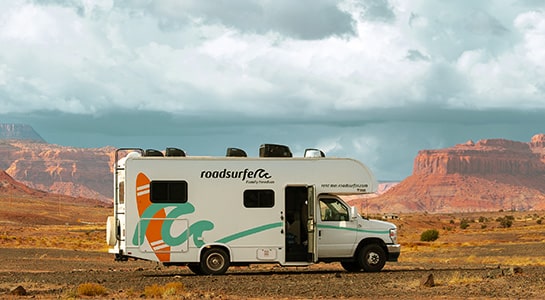
Both. It depends on what you’re looking for. If you want lots of variety over short distances, Europe is hard to beat and well worth the flight: fjords, sea cliffs, vineyards, and beaches are all within reach of the nearest station, and centuries-old towns come with the scenery. If you’re after wide-open spaces, huge national parks, and that classic road movie feeling, North America is right on your doorstep. Our tip for your first trip: Lake Garda or Tuscany in Europe, and the Overseas Highway to Key West in North America.
The Pacific Coast from Seattle to San Francisco combines rainforest, sea cliffs, and redwoods on a single route. If national parks are more your thing, we recommend the route from Phoenix to the Grand Canyon and Monument Valley or the loop through Colorado.
Plan at least ten days to two weeks. The routes themselves take 7 to 14 days, plus your flights across the Atlantic and a day or two to get over the jet lag. Distances in Europe are short, so you can see a lot without moving on every day.
For most routes, late spring, early summer, and September are ideal. In Norway, Colorado, and the Canadian Rockies, mountain roads usually don’t open until late May or June. Florida, Arizona, and Andalusia are better in winter, spring, or fall, because summers there are very hot.
Yes, on some routes this makes sense, for example from Seattle to San Francisco or from Calgary to Vancouver. You’ll see right when you book whether a one-way rental between two stations is possible, but at the moment we only allow one-way rentals within North America, Most routes in this article are loops that start and end at the same station.
In peak season, yes, especially in US national parks: campgrounds at the Grand Canyon or in Rocky Mountain National Park are often booked up months ahead. In Europe, outside of July and August, booking a few days ahead is usually enough. For Lake Garda and the fjords in summer, though, book earlier.

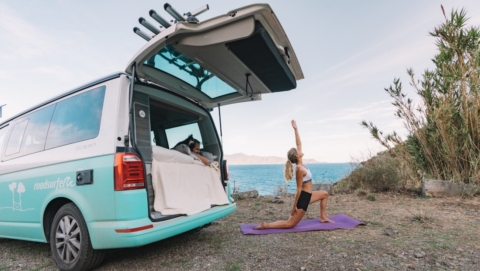










Rent an RV in the US, Canada, or Europe
Pacific Coast or Norway’s fjords, the Grand Canyon or Tuscany: pick your favorite route, choose your station, and book your camper van.
Find Your RVTravel smarter with roadsurfer.
Trusted by thousands of travelers worldwide.
✓ Backed by 20,000+ Google reviews
✓ Built for families, couples & adventurers
✓ Inspiration & exclusive deals for subscribers