Travel Smart

Daisy Hammersley • Last Updated: 27 May 2026 • 7 min read
Motorhome holidays are becoming increasingly popular – but many first-time travellers initially ask: what types of motorhomes are there? From compact campervans and panel vans to over-cab motorhomes, semi- or fully integrated models and Class C motorhomes, the vehicles differ significantly in size, comfort, driving behaviour and space. This guide explains the key differences and helps you find the right motorhome type for your next trip.
The different motorhome types mainly vary in how flexible they are for everyday use and travelling. Campervans and panel vans are ideal for spontaneous road trips and easy handling, semi-integrated motorhomes offer greater comfort, while fully integrated models, over-cab motorhomes and Class C motorhomes are designed for maximum space and longer journeys. The comparison below gives you an at-a-glance overview of the key differences between each type of motorhome.
| Feature | Campervan | Panel van | Over-cab motorhome | Semi-integrated motorhome | Class C RV | Fully integrated motorhome |
|---|---|---|---|---|---|---|
| Size | Very compact (4.8–5.5 m) | Compact to mid-sized (5.5–6.5 m) | Large (6.5–8 m) | Mid-sized (6.5–7.5 m) | Mid-sized to large (6.5–8.5 m) | Large (7–9 m) |
| Driving experience | Car-like and very easy to drive | Van-like with good manoeuvrability | Larger and taller; takes some getting used to | Comfortable with good drivability | Large, bus-like driving feel; requires experience | Bus-like; best suited to experienced drivers |
| Sleeping capacity | 2–4 | 2–4 | 4–6 | 2–5 | 4–7 | 4–8 |
| Interior space | Compact and multifunctional | Efficient use of space | Plenty of space with an additional overcab bed | Separate living and sleeping areas | Spacious living area with plenty of room to move around | Very spacious with multiple living areas |
| Bathroom | Compact wet room or outdoor shower | Compact bathroom or wet room | Full bathroom with shower | Bathroom with optional separate shower | Bathroom with optional separate shower | Large bathroom with separate shower |
| Storage space | Limited, but efficiently used | Practical storage for road trips | Lots of storage space for families | Large interior and exterior storage | Very large storage capacity for longer journeys | Extensive interior and exterior storage |
| Best for | Couples, city breaks, road trips | Couples, flexible touring holidays | Families with children | Families and longer trips | Families and extended journeys | Large families and long-term travel |
| Set-up & practicality | Very simple – park up and go | Quick and straightforward set-up | Requires more space when setting up | Easy to set up with occasional levelling needed | Needs more space for manoeuvring and parking | Needs more space for manoeuvring and parking |
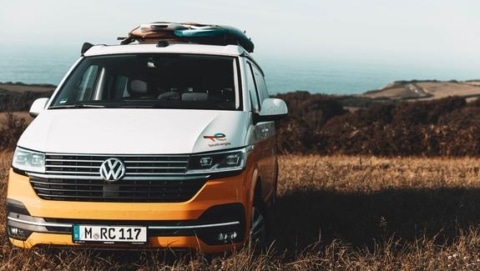
Campervans are compact motorhomes usually based on smaller vans or transporters. They are easier to drive, simpler to park and far more flexible for everyday use than larger motorhomes. Despite their compact size, campervans still offer sleeping space, a small kitchen and essential storage for motorhome travel.
Campervans are particularly well suited to road trips, touring holidays and spontaneous getaways with frequent stops along the way. Beginners, couples and solo travellers especially benefit from their easy handling and smaller footprint on roads and campsites.
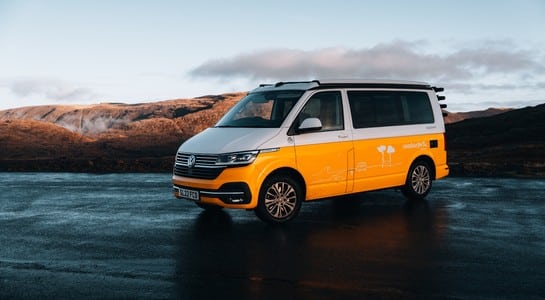
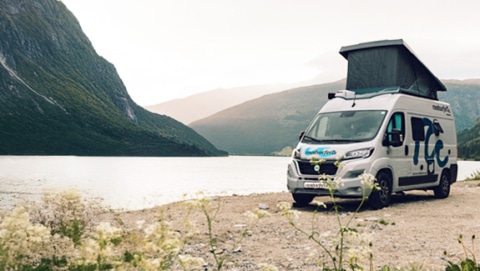
Panel vans are based on larger vans and offer more space and features than classic campervans, while still being far more compact than larger motorhomes. They usually include fixed sleeping areas, a small kitchen and a wet room, without completely losing the familiar driving feel of a van.
Panel vans are particularly well suited to longer motorhome trips, flexible touring holidays and travellers who want extra comfort without sacrificing manoeuvrability. Thanks to their compact design, they fit on many campsites and are easier to manoeuvre than semi-integrated or fully integrated motorhomes.
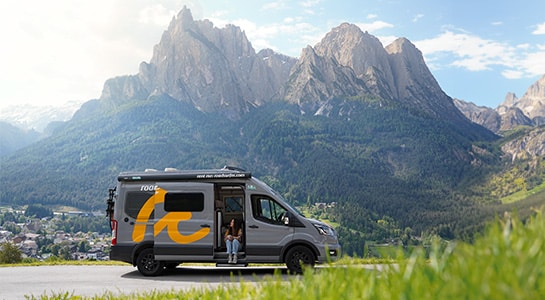
Larger motorhomes, such as semi-integrated and fully integrated models, over-cab motorhomes and Class C RVs, offer significantly more space, comfort and equipment than compact campervans or panel vans. They are often designed like a small home on wheels and are particularly well suited to longer motorhome trips, family holidays or travelling with several people, where living space and comfort are a priority.
At the same time, these motorhome types require more planning, especially when it comes to routes, campsites and driving in narrow or urban areas. They are ideal for travellers who value comfort and space, but less suitable for spontaneous city trips, frequent changes of location or anyone looking for a compact and easy-to-manoeuvre vehicle.
Over-cab motorhomes are recognisable by the sleeping area above the cab, which creates additional living and sleeping space. They usually offer more fixed sleeping places than other motorhome types, making them particularly well suited to families or larger travel groups. Thanks to their larger body, alcove motorhomes often provide plenty of storage, separate living areas and comprehensive equipment for longer trips.
Over-cab motorhomes are especially suitable for family holidays, extended camping trips and travelling with several people. The focus is less on compact drivability and more on maximum space and comfort while on the road.
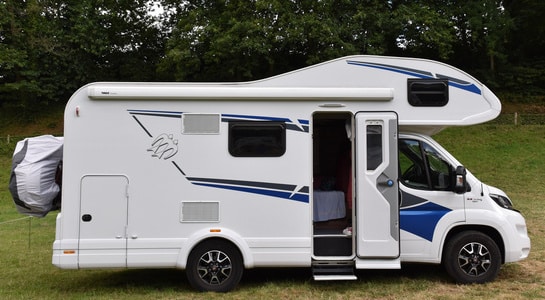
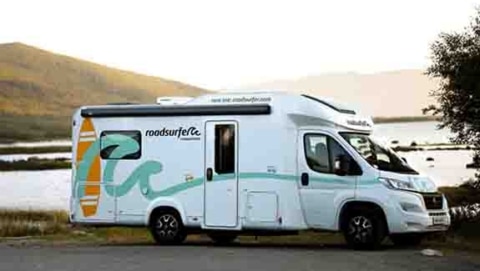
Semi-integrated motorhomes offer more space and equipment than campervans or panel vans, while remaining significantly more compact and easier to drive than fully integrated models. They usually include fixed sleeping areas, a fully equipped kitchen, a bathroom and additional storage space for longer motorhome trips.
Semi-integrated motorhomes are particularly well suited to families, couples and travellers who want more comfort without sacrificing a pleasant driving experience. They are considered a versatile option for longer road trips, touring holidays and classic camping holidays in a motorhome.
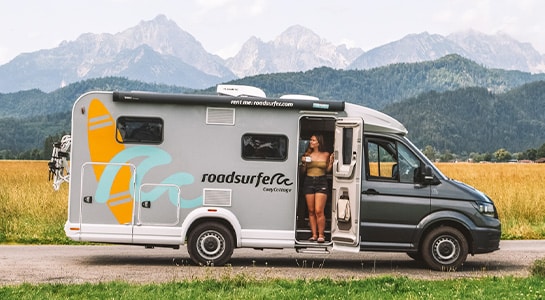
Class C RVs are medium to large motorhomes built on a reinforced chassis with a separate cab. They offer plenty of space and equipment and sit between semi-integrated and fully integrated motorhomes, but generally feel larger and less compact when driving.
Class C motorhomes are particularly well suited to longer motorhome trips, families or groups with high space requirements, and travellers who prioritise comfort and living space over maximum manoeuvrability.
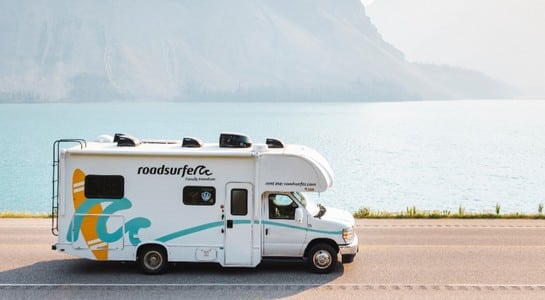
Fully integrated motorhomes are the largest type of motorhome and are usually built on heavy-duty truck or bus-like chassis. Inside, they offer significantly more living space than other motorhome types and are often equipped with large kitchens, plenty of storage and spacious sleeping areas.
They are particularly well suited to longer motorhome trips with fewer location changes or for travellers who prioritise maximum comfort and space inside the vehicle. Due to their size, however, they require careful route planning and campsite selection.
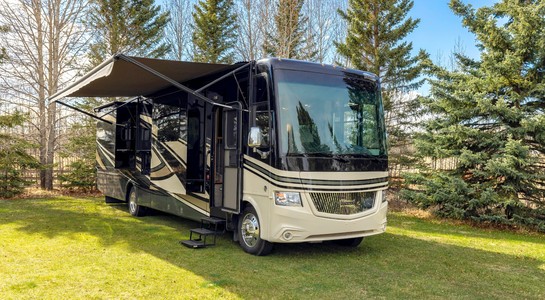
Not all camping vehicles fall into the category of classic motorised motorhomes. In particular, trailer-based vehicles such as caravans, as well as other special forms like pickup truck camper units or larger Super C models, complement the traditional motorhome categories.

Caravans are available in many different sizes and layouts. They require a suitable towing vehicle and some experience when manoeuvring.

Larger towable caravans are connected over the bed of a pickup truck using a fifth-wheel hitch. They offer apartment-like interiors but require a specialised towing system.
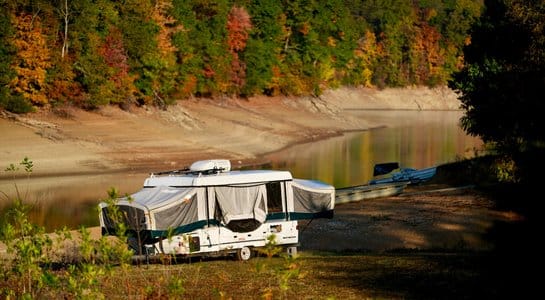
Lightweight folding caravans are expanded once set up at the campsite. They are budget-friendly but offer limited insulation and equipment.

Compact living cabins that sit directly on the load bed of a pickup truck. Very mobile, but with minimal space.

Heavier, more powerful versions of alcove models with greater engine power and higher towing capacity. Ideal for longer trips with additional equipment.
In most cases, a standard car driving licence (category B) is sufficient to drive a motorhome. This applies in particular to campervans, panel vans and most semi-integrated and alcove motorhomes, as long as the maximum authorised mass is generally up to 3.5 tonnes. An additional driving licence may only be required for very large or particularly heavy motorhomes. The key factor is not the motorhome type, but the maximum authorised mass and the relevant national regulations.
To hire a motorhome, you usually need to be around 21 years old and have at least one year of driving experience. To check the rental requirements for your region, you can find more information in our FAQs about the minimum age required for motorhome hire.

Once you understand the differences between the various vehicle types, it becomes much easier to find the right model for your travel style. Whether you want the spacious comfort of a large luxury motorhome, the simplicity of a compact campervan or the balanced option of an alcove motorhome, each category offers its own advantages for your journey.
Campervans are generally the most fuel-efficient, as they use smaller engines and lighter vehicle frames than larger motorhomes.
Of course, actual fuel consumption still depends on factors such as speed, load and terrain – but compact vans consistently deliver the best efficiency.
Yes, in Europe there are restrictions for motorhomes at campsites and motorhome pitches, depending on the country, region and individual site. Vehicle size, length or height often play a role, especially for larger motorhomes. In popular holiday regions, many sites also require advance booking. It is therefore best to check the specific site rules in advance to ensure a smooth arrival and find suitable pitches. On roadsurfer spots you can also filter campsites and pitches by vehicle type.
Over-cab motorhomes are often best suited for winter or cold-weather travel, as their larger build allows for stronger insulation and more powerful heating systems than compact campervans. Some luxury motorhomes and alcove models also feature insulated tanks or special winter packages that help prevent freezing in low temperatures.
The difference between a motorhome and a leisure vehicle is purely linguistic. Both terms refer to the same type of vehicle: a motorised vehicle with living and sleeping areas. “Motorhome” is the more commonly used term, while “leisure vehicle” sounds more formal and is often used in official contexts.
Whether campervans are better than larger motorhomes depends on your travel style. Campervans are more compact, easier to drive and ideal for flexible road trips, cities and frequent changes of location. Larger motorhomes, on the other hand, offer more space, comfort and sleeping options, but are less manoeuvrable and require more planning.
From picking the right model to planning routes and campsites, our campervan guides hub pulls everything into one place so you don’t have to piece it together from scratch.

Travel smarter with roadsurfer.
Trusted by thousands of travelers worldwide.
✓ Backed by 20,000+ Google reviews
✓ Built for families, couples & adventurers
✓ Inspiration & exclusive deals for subscribers