





_5.jpg)


_12.jpg)


Travel Tips & Planning
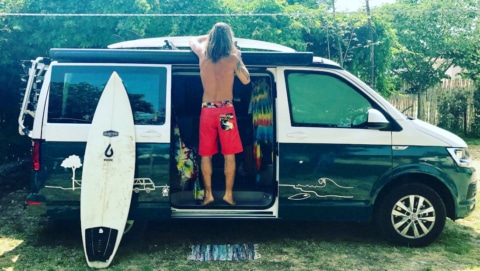
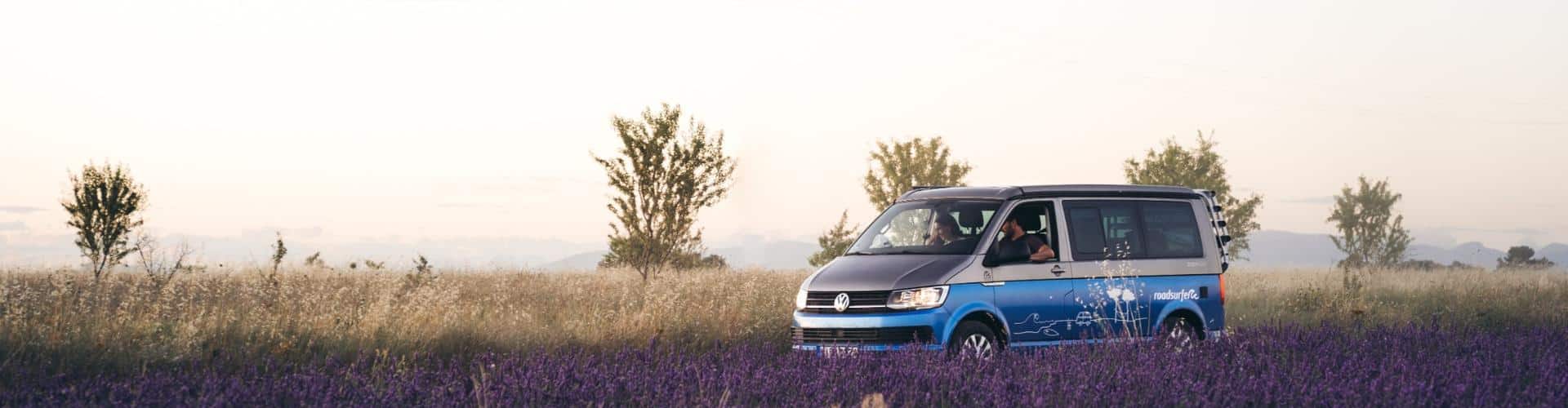
If you’re dreaming of camping in France, there’s no better way to see it all than by RV—rolling from one region to the next, discovering local flavors, and parking up in unforgettable spots. Whether you start in Alsace’s wine country, cruise the sunlit South, or chase sea breezes on the Brittany coast, these handpicked routes give you a taste of France’s best scenery and adventure. For even more trip ideas or to find your nearest pick-up location, check out the full list of roadsurfer stations in France..
7-day Itinerary
Strasbourg ➤ Obernai & Mont Sainte-Odile ➤ Hohkönigsburg ➤ Alsace Wine Route Villages ➤ Colmar ➤ Lac Blanc ➤ Route des Crêtes ➤ Hartmannswillerkopf ➤ Strasbourg
This 7-day road trip links fairy-tale wine villages, grand castles, mountain lookouts, and vibrant town squares. Start your journey in RV rental in Strasbourg, where riverside cafés, half-timbered alleys, and cosmopolitan energy set the mood for your adventure. From there, roll into vineyard country, climb to panoramic peaks, and taste your way through Alsace’s most iconic towns—each day packed with postcard moments and fresh surprises.

10-day Itinerary
Toulouse ➤ Albi ➤ Gorges du Tarn ➤ Carcassonne ➤ Pyrénées Ariégeoises ➤ Narbonne & Montpellier ➤ Toulouse
If you’re drawn to vibrant colors, rich flavors, and days that start with market mornings and end on Mediterranean beaches, the South of France is your kind of adventure. This 10-day journey is all about variety—drifting from Toulouse’s lively streets to medieval towns, through dramatic river gorges, past rolling vineyards, and finally reaching the sparkling coast. For an easy and flexible start, consider picking up your vehicle in Toulouse and set off at your own pace. Every region along the way brings something new to taste, see, and experience, inviting you to linger just a little longer wherever the mood takes you.
8-day Itinerary
Rennes ➤ Saint-Malo ➤ Cap Fréhel & Cancale ➤ Plage de Trestrignel ➤ Île de Batz ➤ Crozon ➤ Rennes
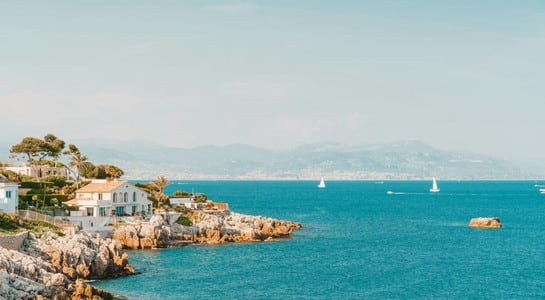
If sun-soaked vineyards aren’t calling your name, Brittany offers a fresh alternative—where wild coasts, windswept beaches, and salt-sprayed towns set the pace. This 8-day road trip is made for those who love the sound of crashing waves, lighthouses perched on rocky cliffs, and seafood straight from the source. From bustling markets in Rennes to tidal magic in Saint-Malo, Brittany is the kind of place where you trade routine for discovery and let the Atlantic air clear your mind.
Yes, Americans can drive in France with a valid U.S. driver’s license, but an International Driving Permit (IDP) is strongly recommended. For the latest requirements, check the U.S. Embassy’s guide on driving in France.
May to October is the best season for a camping road trip in France. You’ll enjoy mild weather, open tourist attractions, and vibrant scenery. July and August are the busiest months—book ahead for camping spots.
Wild camping is generally not allowed in France, especially in protected or tourist areas. Always use official camping spots or “aires de service” to avoid fines. For regulations, visit the French government’s camping page.
Yes, booking in advance is highly recommended during summer or in popular regions. Off-season, you’ll often find last-minute availability, especially in rural areas or smaller campgrounds.
Yes, most major highways in France charge tolls (“péages”). You can pay by credit card or cash at toll booths. For official info and route planning, see the French motorway association website.
Yes, but automatic vehicles are less common than manuals, so reserve early. If you require an automatic, book in advance as most rentals in France are manual transmission.

Travel smarter with roadsurfer.
Trusted by thousands of travelers worldwide.
✓ Backed by 15,000+ Google reviews
✓ Built for families, couples & adventurers
✓ Inspiration & exclusive deals for subscribers