




_10.png)


_7.jpg)


_13.png)


.jpg)


Extended Trips

Meili Wyss • Last updated: June 3, 2026 • 7 min read
The best places to see the August 12, 2026 solar eclipse in Spain are Galicia, Asturias, Cantabria, the Basque Country, Navarre, and Aragon. All of these regions lie within the path of totality, but they offer very different viewing conditions depending on landscape, weather, and crowd levels. If you’re planning a flexible eclipse route, starting with an RV rental in Spain gives you more freedom to adjust your position as forecasts become clearer.
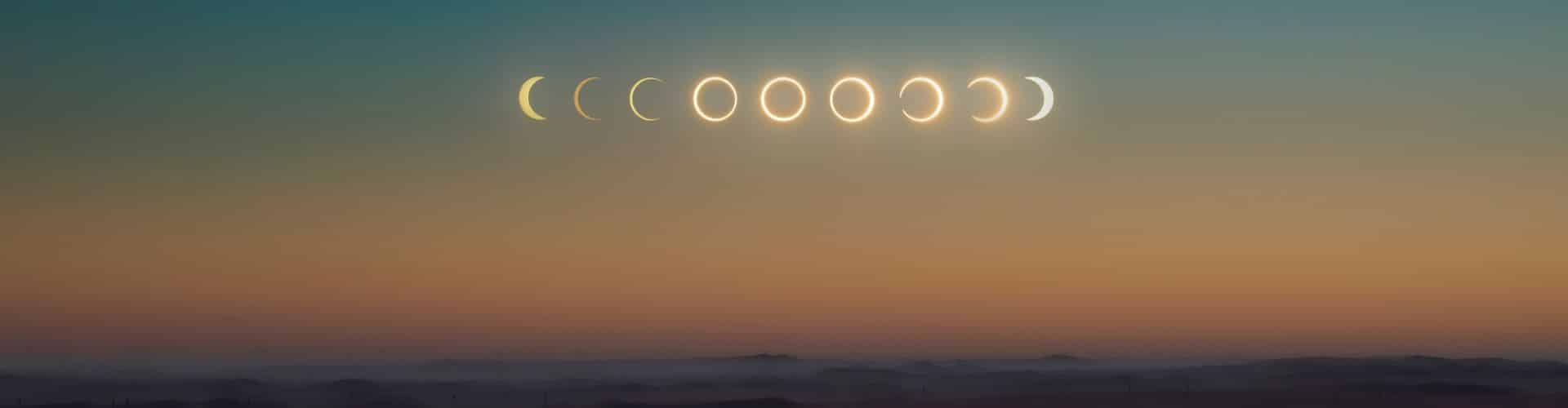
A total solar eclipse is already rare, but seeing one at sunset over northern Spain is on another level. On August 12, 2026, the moon will pass directly in front of the sun, daylight will dim, the air may cool, and the sun’s corona will briefly appear around the moon. It is one of those natural events that feels unreal, even when you know exactly what is happening.
Spain makes this eclipse especially exciting because totality crosses some of the country’s best road trip regions. Instead of flying somewhere just to stand in one viewing spot, you can turn the eclipse into the highlight of a bigger journey through Atlantic coastlines, mountain landscapes, wine regions, and historic towns.
The eclipse happens close to sunset, so your viewing location matters. Open horizons, coastal viewpoints, and elevated landscapes can make the difference between a blocked view and a truly dramatic one.
With an RV, you are not locked into one city or hotel. You can follow the forecast, adjust your route, and choose your final eclipse spot based on the best conditions. For an event this rare, that flexibility matters.
In Spain, the 2026 solar eclipse is not just something to watch. It becomes a reason to hit the road, explore northern landscapes, and build an entire trip around one rare moment in the sky.

The best places to see the August 12, 2026 solar eclipse in Spain are Galicia, Asturias, Cantabria, the Basque Country, Navarre, and Aragon. All of these regions lie within the path of totality, but they offer very different viewing conditions depending on landscape, weather, and crowd levels.
If you are deciding quickly, here is how the regions compare:
| Region | Best For | Main Advantage | Key Risk | Works Best When |
|---|---|---|---|---|
| Galicia | Coastal scenery | Wide Atlantic horizons and dramatic sunset views | Cloud and marine haze | The coastal forecast is clear and haze risk is low |
| Asturias | Flexible landscapes | Coast, mountains, and inland valleys within short driving distance | Terrain may block the low Sun | You want several fallback locations nearby |
| Cantabria | Easy logistics | Short drives between coastal towns and viewpoints | Fewer inland fallback options | Coastal conditions are stable across the region |
| Basque Country | Culture and city access | Easy to combine Bilbao or San Sebastián with nearby viewpoints | Buildings, hills, and crowds can limit visibility | You can leave the city before sunset |
| Navarre | Fewer crowds | Open rural space and quieter viewing options | Less dramatic scenery | You prioritize space and calm over scenery |
| Aragon | Visibility-first planning | Open inland terrain and clearer western sightlines | Less scenic surroundings | You care more about visibility than the backdrop |
FOR COASTAL TOTALITY WITH AN OPEN ATLANTIC HORIZON
Galicia is one of the strongest western options, with totality visible along the coast around A Coruña.
The coastline offers exposed viewpoints and wide western sightlines, especially around headlands and cliffs where the Atlantic opens fully toward the horizon. This matters because the sun will sit low, and even distant terrain can block the view.
Galicia is also close to some of Spain’s longer totality zones, though duration varies by location.
Coastal weather is the main drawback. Cloud and haze from the Atlantic can affect visibility, sometimes across surprisingly short distances along the coast.
Checking conditions locally matters more here than in most other regions.

With an RV, you can:
Choose a general coastal base, then:
FOR COASTAL TOTALITY WITH AN OPEN ATLANTIC HORIZON
Asturias combines coastline and mountains, giving you several viewing options within short distances.
You can move between coastal viewpoints, inland valleys, and higher elevations depending on conditions. In practice, that means you are not locked into one type of landscape and can react to changing conditions without leaving the region.
This makes Asturias one of the more adaptable regions along the eclipse path.
Terrain is the main challenge. Mountains and valleys can block the western horizon, especially in areas where the landscape rises quickly behind the coastline or along valley edges.
Because the sun will be low at sunset, even moderate terrain can cut your viewing window short if you position yourself poorly.

With an RV, you can:
Focus on:
FOR MOUNTAIN SCENERY AND MULTIPLE VIEWING ENVIRONMENTS
Cantabria offers one of the simplest setups, with well-connected towns along the coast.
You can move between places like Santander, Comillas, and San Vicente de la Barquera without long drives, which makes last-minute repositioning manageable.
The coastline is also relatively continuous, so finding another viewing point nearby is usually straightforward.
Most viewing options are coastal. Unlike Asturias or Aragon, you do not have very distinct inland alternatives if conditions change.
If cloud cover settles along the coast, your options can narrow quickly.

With an RV, you can:
Focus on:
FOR COMBINING THE ECLIPSE WITH CITIES, FOOD, AND CULTURE
The Basque Country offers a convenient option near cities like Bilbao and San Sebastián.
Short distances mean you can spend the day exploring the city and still reach a viewing spot along the coast or just inland by evening. In practice, that makes it one of the easiest regions to build into a broader itinerary without planning your entire trip around the eclipse.
Urban density is the main challenge. Along much of the coastline, hills, buildings, and developed areas can interrupt the western horizon.
Because the sun will be low, even small obstructions can affect your view more than you might expect.

With an RV, you can:
Focus on:
FOR OPEN LANDSCAPES AND A QUIETER VIEWING EXPERIENCE
Navarre offers a more low-key alternative along the eclipse path, with fewer crowds and more open space compared to coastal regions.
The main advantage here is space. You are more likely to find quiet rural areas where you can set up without competing for the same viewpoints as other travelers.
This can make the experience feel much calmer, especially compared to coastal hotspots.
Navarre is less visually dramatic than other regions. Much of the landscape is made up of rolling countryside and agricultural land rather than cliffs or mountains.
That makes visibility easier, but the setting itself is less distinctive.

With an RV, you can:
Focus on:
FOR ONE OF THE STRONGEST VISIBILITY-FIRST OPTIONS
Aragon, especially around Zaragoza, is one of the more reliable regions for seeing the eclipse clearly.
The landscape is defined by wide, open plains with very little elevation. In areas around the Ebro valley, the horizon can stretch for miles, making it easier to follow the sunas it drops.
If your main priority is a clear, unobstructed view, this gives Aragon a practical advantage.
Compared to coastal or mountain regions, Aragon feels more minimal. You are less likely to get dramatic scenery as a backdrop, even though viewing conditions are often more straightforward.
For some travelers, that’s a drawback. For others, it’s exactly the point.

Even in a strong region, local conditions can still vary.
With an RV, you can:
In Aragon, success comes down to simple positioning.
Focus on:
Spain is one of the best places in Europe to experience totality, but it is not the only destination worth planning around. Across much of Europe, the August 12, 2026 eclipse will appear as a partial eclipse, making it a rare reason to plan a late-summer RV trip around open horizons, coastal viewpoints, and scenic evening landscapes.
Portugal is the strongest non-Spain option if you want to stay close to the path of totality. A tiny area in the far northeast, including Rio de Onor, is expected to experience totality, while nearby Bragança works as a more practical road trip base. Because the totality zone is so small, exact positioning and local forecasts will matter.

Brittany is one of the best partial-eclipse road trip options in Europe. Its Atlantic coastline, cliffs, beaches, and open western horizons make it a beautiful place to watch the evening light shift. For the strongest setting, look toward Finistère or the Crozon Peninsula.

Normandy offers an easier coastal alternative, with wide beaches, open sea views, and scenic routes between historic towns. It is a strong choice if you want the eclipse to be part of a relaxed summer RV trip rather than the only focus of your route.

Lake Geneva can turn the partial eclipse into a lake-and-mountain road trip. Open water gives you broader sightlines than many alpine valleys, but location still matters. Choose western-facing lakeshores or elevated viewpoints where mountains and buildings do not block the low Sun.
Lake Garda is a strong choice if you want a summer RV trip with the eclipse as a bonus. The lake, surrounding towns, and mountain scenery make the setting memorable, but the low Sun means you should avoid narrow viewpoints where surrounding terrain blocks the western sky.

Choosing the right region is only part of the decision. Because the eclipse happens close to sunset, your exact viewing location can matter just as much as where you base your trip.
Start by picking a region that fits your priorities, whether that is reliability, scenery, or fewer crowds. Then stay flexible. Conditions can shift in the final days, and even small changes in position can affect what you see.
Traveling by RV gives you that flexibility. Instead of being tied to one location, you can adjust your route, move away from crowds, and position yourself where visibility is best as eclipse day approaches.
For an event that lasts only a few minutes, that ability to adapt can make all the difference.
Northern Spain offers the best opportunities to experience totality, with Galicia, Asturias, Cantabria, the Basque Country, Navarre, and Aragon all lying within the eclipse path. This gives travelers multiple options for viewing the event from coastlines, mountains, and open countryside.
The best region depends on the type of experience you’re looking for. Galicia is known for dramatic coastal scenery, Asturias for mountains and outdoor adventure, the Basque Country for food and culture, and Aragon for wide-open skies near the center of the eclipse path. Travelers should also consider weather forecasts when choosing a viewing location.
It’s best to start planning as early as possible. The 2026 solar eclipse is expected to attract visitors from across Europe and beyond, which may increase demand for accommodations, transportation, and overnight parking options throughout northern Spain.
Cloud cover can affect eclipse visibility, even within the path of totality. Travelers who remain flexible with their plans may be able to relocate to nearby areas with better viewing conditions as weather forecasts become more accurate in the days leading up to the event.
Yes, certified solar eclipse glasses are required whenever any part of the sun remains visible. Looking directly at the sun without proper eye protection can cause serious eye damage. Only remove eclipse glasses during totality if you are located within the path of totality and the sun is completely covered.

Totality only lasts a few minutes, but the road trip around it can become the real adventure. With the freedom to adjust your route, avoid crowded viewpoints, and move toward clearer skies, an RV gives you the flexibility this eclipse demands.
Plan Your Spain RV TripTravel smarter with roadsurfer.
Trusted by thousands of travelers worldwide.
✓ Backed by 15,000+ Google reviews
✓ Built for families, couples & adventurers
✓ Inspiration & exclusive deals for subscribers