

Extended Trips

Meili Wyss • Last updated: July 29, 2026 • 8 min read
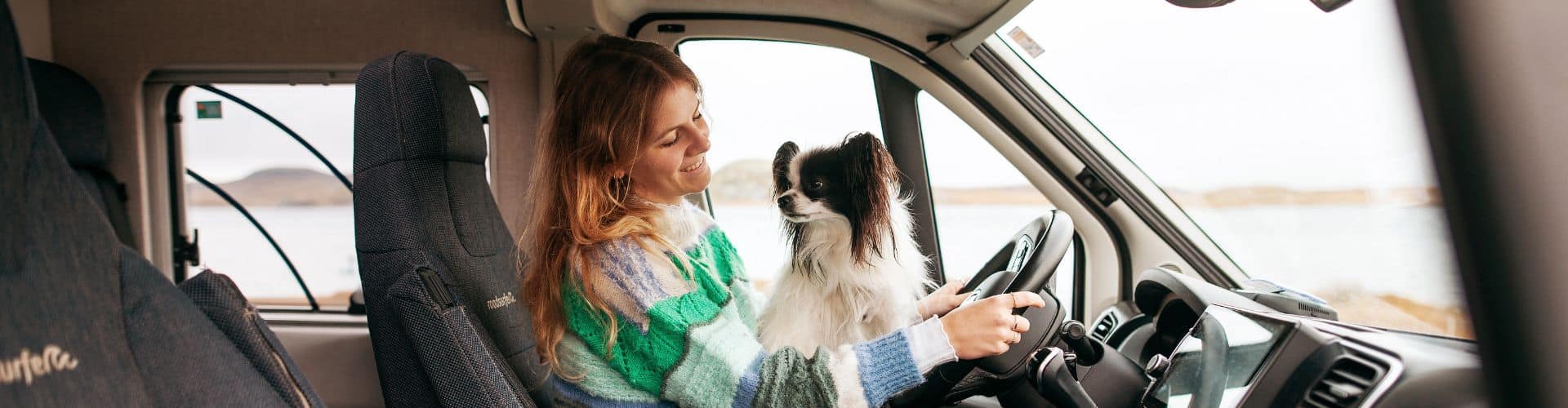
Camping with dogs is easier in the US than almost anywhere else. Public land is everywhere, most camping spots accept pets, and no one looks twice at a dog riding shotgun in an RV. The part that trips people up isn’t whether dogs are allowed. It’s that the rules change depending on whose land you’re parked on.
This guide covers where dogs can go, how to prepare, what to pack, and what an RV changes about the whole experience. If you’re still sorting out the basics of your trip, our RV guides cover everything from vehicle types to costs.
Yes. Dogs are welcome at most camping spots in the US, from national forest sites to private resorts. The universal baseline is a 6-foot leash in developed areas, waste bags in hand, and a dog that doesn’t bark through quiet hours. Beyond that baseline, rules depend on the land type, and checking before you go is the single most useful planning step.
The reward for that small homework: the US has more legal places to camp with a dog than any one trip could use.

Dogs are allowed on almost all US public land, but the freedom varies. National parks are the most restrictive. National forests and BLM land are the most relaxed. Here’s the short version:
| Land type | Leash rule | Where your dog can go |
|---|---|---|
| National parks (NPS) | 6 ft leash at all times (36 CFR 2.15) | Developed areas, paved roads, most camping areas. Usually not on trails or in buildings. |
| National forests (USFS) | 6 ft leash in developed recreation areas | Nearly everywhere, including most trails. Under control off-leash outside developed areas. |
| BLM land | Leash in developed areas; under control elsewhere | Most trails and dispersed camping areas. Rules vary by field office. |
| State parks | Set by each state | Varies widely. Check the specific park’s page. |
| Private camping spots | 6 ft leash is the standard house rule | Pet areas vary by property. Call ahead. |
The pattern worth remembering: the more famous the destination, the stricter the rules. In most national parks, your dog can join you at the camping spot and on paved roads but not on the hiking trails. The national forest next door often allows dogs on every trail. Planning a route that alternates between the two gets you the scenery and the dog-friendly hiking.
The National Park Service sums up its rules with the B.A.R.K. principles: Bag your pet’s waste, Always leash your pet, Respect wildlife, Know where you can go. Many parks run B.A.R.K. Ranger programs for visiting dogs. It’s a small thing. Dogs seem fine with that.
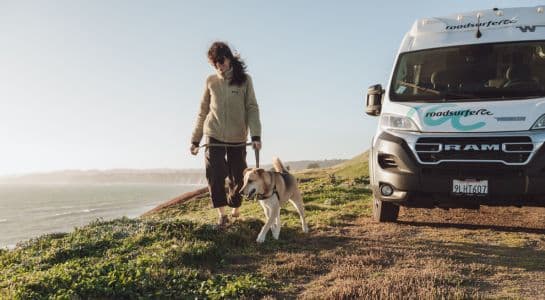
If national parks are on your route, check trail rules on each park’s website before you commit the itinerary, and size your vehicle accordingly. Our guide to the best RV size for national parks explains what actually fits.
Look for camping spots that state their pet policy in writing, then call to confirm. Policies at private properties change more often than websites do, and “pets allowed” can mean anything from a fenced dog park to a single patch of gravel behind the office.
When you call, ask three things:
Once you arrive, the standard house rules apply almost everywhere: keep the leash at 6 feet or shorter, never leave a tethered dog unattended, pick up waste immediately, and deal with barking before your neighbors have to. Aggressive behavior gets dogs (and their owners) asked to leave, and pet-friendly properties enforce this more strictly, not less, because their reputation depends on it.
For the bigger picture on where to park overnight, hookups, and costs, see our RV parks guide.
An RV solves the two biggest problems of camping with dogs: shelter and routine. Your dog sleeps in the same bed every night no matter where you park, and bad weather means a cozy evening instead of a soaked tent. For anxious dogs especially, the vehicle becomes a mobile piece of home.
A few things make RV camping with dogs go smoothly:
Rental policies differ a lot between providers: some charge per pet per night, some restrict breeds. With roadsurfer, pets travel in every RV model for a flat one-time fee, with no breed or size limits. The details are in our guide to pet friendly RV rentals.

The most useful tips for camping with dogs start weeks before the trip, not the night before. The goal: a healthy, identifiable dog that already knows the vehicle.
Pack for your dog like you’d pack for a toddler who eats the same thing every day. The essentials:
Regional extras: a cooling mat for the desert Southwest, an insulated coat for mountain nights, and booties if you’ll hike rocky terrain.
Heat is the number one danger for dogs on camping trips, and vehicles are the worst offender. According to the American Veterinary Medical Association, a parked vehicle’s interior climbs about 19°F in 10 minutes and around 30°F in 20 minutes. Even at 70°F outside, the inside can pass 110°F within the hour. Cracked windows barely change the math.
The rule: never leave your dog alone in a parked vehicle or RV. Not for a quick grocery run, not in the shade. Dogs can’t sweat; they cool themselves by panting, which stops working in a hot box. Flat-faced breeds, puppies, and older dogs overheat fastest.
Beyond heat:
Yes, but mostly in developed areas. Federal rules require a leash no longer than 6 feet at all times, and most parks keep dogs off hiking trails and out of buildings. Check the specific park’s pet page on nps.gov before you go.
On most national forest and BLM land, outside developed areas. Both agencies require a 6-foot leash in camping and picnic areas but allow dogs under voice control on most other land. Confirm with the ranger district or field office for your destination.
Start with one or two nights close to home. Choose a quiet camping spot, bring your dog’s own bed and food, and treat the trip as a rehearsal. You’ll find the gaps in your packing list while the stakes are low.
Not in a parked, unpowered RV. Interior temperatures can rise roughly 19°F in 10 minutes, according to the American Veterinary Medical Association. If you must step away, one person stays with the dog.
Yes, pets are welcome in every roadsurfer RV model. Pets travel for a flat one-time fee per booking, with no breed or size restrictions and no nightly charges. Service dogs travel free with valid proof. Full details are in our pet friendly RV rental guide.

Camping with dogs takes more planning than camping without them, and repays it the first evening your dog flops down by the camp chairs like this was the plan all along. Check the rules for the land you’re on and respect the heat. The rest tends to sort itself out.
If you’re deciding what kind of trip fits a dog best, start with our guide to RV camping and build from there.
Book your pet friendly RV


Travel smarter with roadsurfer.
Trusted by thousands of travelers worldwide.
✓ Backed by 20,000+ Google reviews
✓ Built for families, couples & adventurers
✓ Inspiration & exclusive deals for subscribers