Camping Guides
Meili Wyss • Last updated: August 14, 2026 • 16 min read
A Burning Man RV rental is not a normal rental. Black Rock City has no power hookups, no water hookups, and no sewer connections, and the only thing sold inside the city is ice. For nine days the vehicle is your water supply, your power plant, and your sealed waste tank.
If any of the three runs out early, you are solving it in triple-digit heat with no store to walk to. An RV that handles a comfortable week in Yosemite can run out of usable capacity by Wednesday on the playa.
This guide covers which vehicle fits which group, what you have to carry yourself, what the trip costs beyond the nightly rate, and the rules that catch first-timers out. If you are new to any of this, start with our RV planning resources.
Yes. roadsurfer allows its campers at festivals including Burning Man, on the condition that you park somewhere you can drive back out of, and that you cover recovery costs if you get stuck.
Burning Man permits RVs too, though its own RV page is openly ambivalent about them, describing RVs as “equally loved and abhorred” and asking “Why bother coming to Burning Man if you are going to spend all your time in your RV?” in its official RV guidelines.

Read that in the context of Black Rock City. Gate Road and the open camping blocks are hardpan playa, firm and drivable in dry conditions. Wet, that same surface becomes the reason people walked out in 2023.
Our own festival guidance for campers puts the responsibility plainly:
“Festivals usually take place in the countryside. Please note that you are not allowed to drive ‘off-road’ according to the terms and conditions. It is therefore your responsibility to ensure that you can park safely on the festival site and drive back down again. If you get stuck in mud, we can have the mobility service pull you out, but you will have to bear the costs. So please drive carefully and only in places where you are sure that they are passable.”
The rule is not “avoid the playa.” It is: judge the surface, park where you can leave, and do not gamble on ground you are unsure about. Much of this applies to any large event, and our guide to festival camping in an RV covers the general version.
Three requirements come from the event rather than from us:
One more rule surprises people who have camped in an RV before: once you park, the RV stays parked. Driving cars and trucks on the playa has been prohibited since 1997, with exceptions only for arrival, reaching camp, and departure. Pick your spot once. The city runs on bikes and feet.
Match the RV to your group size and your water math, not to the number of beds. Burning Man’s official water figure is 1.5 gallons per person per day, and there is no way to refill on the playa.
| Model | Sleeps | Fresh water tank | Extra water to carry |
|---|---|---|---|
| Couple Condo Class B |
2 adults + 1 child | 32.3 gal | None for two adults |
| Horizon Hopper Class B, all-wheel drive |
2 adults | 20.8 gal | 7 gal |
| Liberty Lodge Class B |
4 adults | 32.3 gal | 22 gal |
| Family Freedom Class C |
5 adults | 40 gal | 28 gal |
For two people, the Couple Condo is the only model that clears nine days of water on its own tank, with about five gallons of margin. Everything else means jugs filled before you leave pavement, which is normal practice out there and worth planning rather than discovering.
The Horizon Hopper is the one to consider if 2023 is on your mind. It is the only all-wheel-drive model in the US fleet. In 2023, close to an inch of rain turned the playa to mud, a driving ban held until Monday afternoon, and only off-road vehicles could move at all.
That matters commercially as well as practically: recovery costs sit with the renter, so the vehicle that gets itself out is the one that does not generate a towing bill. All-wheel drive is not permission to drive on ground you would otherwise avoid, and it will not rescue a vehicle parked somewhere it cannot leave.
For groups of four or five, book on beds and accept the resupply. The Liberty Lodge sleeps four and the Family Freedom sleeps five, and both need meaningful water carried in. Liberty Lodge has a further constraint worth knowing: its black water tank is 28 qt, roughly 7 gallons, which for four people means planning pump-outs from day one rather than mid-week.
Every model has an indoor toilet, a hot shower, solar, and an inverter. None has onboard WiFi. And every model page carries a line worth reading literally: “despite the solar panel, the camper’s batteries are not suitable for extended periods without shore power.” Burning Man is eight nights with no shore power anywhere.
Burning Man’s official figure is 1.5 gallons of water per person per day, covering drinking, washing, and cleaning. That is 27 gallons for two people across the full nine days, and 54 for four. The only on-playa RV service is tank pumping, which removes waste. It does not fill fresh water.
| Group size | Days | Minimum fresh water |
|---|---|---|
| 2 people | 9 | 27 gallons |
| 4 people | 9 | 54 gallons |
| 5 people | 9 | 67.5 gallons |
Fill the onboard tank before you arrive, which is our standing festival advice, and carry the balance in jugs filled while you still have towns. Water is sold along the route: vendors in Reno and Sparks at roughly $0.40 per gallon, and the Gerlach General Improvement District at $0.60, moving to 24-hour service in the days before the event.
Bottled and flat-rate RV fills cost more. Hours at the small Gerlach and Empire vendors are seasonal and worth a phone call.
Treat the figure as a floor, not a target. It covers survival, not comfort, and it does not account for a shower you actually want to take after three days.
Nowhere on the playa. Dumping gray or black water on the ground is prohibited by federal closure order, and the penalty is a fine plus up to 12 months of imprisonment. The most recently published BLM closure order for the Black Rock Desert prohibits “the discharge and dumping of grey and black water onto the playa/ground surface.” There is no dump station in Black Rock City.
Our own festival guidance says the same thing more briefly: monitor the gray water level, and empty only in designated areas. If the tank system itself is new to you, our guide to how your RV’s water and waste tanks work is the place to start.
Gray water counts, which is where renters get caught. Burning Man’s gray water guidance defines it as water used for cooking, washing, dishwashing, or bathing that contains soap, detergent, or food residue, and classifies it as MOOP: Matter Out of Place.
Poured out, it turns hardpan clay into slick mud that your neighbors then walk through. Porta-potties accept only human waste and toilet paper, so emptying a tank into one is also prohibited.
That leaves three legal routes:
Use one-ply RV toilet paper. Multi-ply is what turns a small tank into a mid-week emergency. And note that emptying the gray water tank and the toilet properly is part of how every roadsurfer is meant to come back, so a dump station on the way home does double duty.
Only with a generator and enough fuel. Solar and a house battery will not carry eight nights, and our own guidance is explicit that electricity is not normally available on a festival site and the battery should never drop below 30%. Every US model page adds: “despite the solar panel, the camper’s batteries are not suitable for extended periods without shore power.”
Do the sum before you book. Nine days on the playa with a 30% floor and no way to recharge from a hookup is a different power problem from a weekend at a campground, and it is the constraint most likely to shorten your trip.
Ask us which unit you are getting and whether it has a generator. Liberty Lodge is listed with “inverter/generator” and the build varies between units; Couple Condo, Horizon Hopper and Family Freedom list no generator. If a generator is not available on your booking, plan for a fridge and fans rather than air conditioning, and bring far more ice than feels reasonable.
Air conditioning is listed as usable while parked on all four models without stating what powers it unplugged, and daytime highs on the playa routinely exceed 100°F.
If you do have a generator, Burning Man’s guidance is specific. Run it at least an hour daily. Store gasoline at least 10 feet away and never refuel while it is running. Put cardboard or plywood underneath to protect the playa surface. Shield it for noise, keep an ABC extinguisher visible, and check the carbon monoxide alarm works.
Do not plan on buying fuel inside Black Rock City. Nothing published confirms participant fuel sales on the playa.
Yes. Every motor vehicle driving into Black Rock City needs a Vehicle Pass. It costs $165 plus applicable taxes and fees, and it is sold separately from your ticket. Motorcycles are exempt. A towed trailer is exempt, but the vehicle towing it is not, so an RV needs one pass.
The official Vehicle Pass rules carry three details that catch people out:
If you are buying secondhand, Burning Man’s own guidance is to use the Secure Ticket Exchange Program, never pay by cash or wire, and walk away from any seller unwilling to share their confirmation number. There is an official voided-orders list you can check a number against, with the stated caveat that absence from the list does not prove a ticket is genuine.
Plan for the RV to be your second-largest cost after tickets, plus a set of Burning Man-specific charges that never appear on an ordinary rental. Burning Man’s own RV page still quotes “about $2000 for 10 days,” a figure well below the current market. It is genuinely out of date.
| Item | What to budget |
|---|---|
| Ticket | $550 to $3,000 per person by tier, plus 9% Nevada tax, a $4.50 per-item fee, and a 4% card fee |
| Vehicle Pass | $165 plus taxes and fees |
| Tank pumping | Roughly $50 to $60 or more per service, in cash |
| Fresh water | Around $0.40 to $0.60 per gallon at the main Reno, Sparks, and Gerlach vendors |
| Ice | The only thing sold in Black Rock City, at 3 o’clock, 9 o’clock, and Center Camp |
| Item | Amount |
|---|---|
| Security deposit | $850 to $1,200 depending on location |
| Mileage | Unlimited |
| One-way fee | From $449 in San Francisco, from $349 in Las Vegas |
| Minimum driver age | 21, with a full unrestricted license |
Full details sit on our RV rental prices page. Two costs deserve planning rather than hoping.
Our festival guidance is direct about it: “the cleaning effort can be considerable with mud and dust, so please allow enough time. If this is not the case, we will unfortunately have to charge additional cleaning fees.” Whether a fee applies is the station team’s call on the day, which means the variable you control is how much time you leave for the clean-up.
Our cleaning guidelines are short: empty the gray water tank and the toilet, clean the interior to the state you received it, and clear heavy dirt off the windshield and bumper. Skip the automatic car wash.
If the vehicle gets stuck, we can send the mobility service, and the cost is yours. Budget for the possibility or park so it never arises.
Book early either way. Operators serving this event report selling out four to six months ahead, often by February or March.
Playa dust is a fine alkaline powder that works into filters, vents, electronics, and fabric, and it is the single biggest difference between this trip and any other rental.
Burning Man describes the surface as hardpan alkali containing “alkaline gypsum and silica dust, which can be tough on the lungs,” and describes playa foot, the skin condition it causes, as “in essence, a chemical burn.”
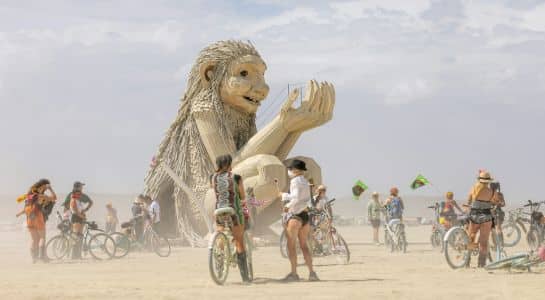
Water is not the answer to a dust-caked surface. Burning Man’s own guidance is that water plus playa clay makes “instant slippery, sticky mud.” One Nevada auto shop that services vehicles after the event describes the result on bodywork as plaster-like, and recommends white vinegar in soapy water rather than plain water.
Community and industry practice, rather than event policy:
Three warnings most guides leave out. Anything taped or fastened to the outside becomes MOOP the moment it starts shedding, so it has to come off intact and go home with you.
Sheeting across the back of an RV can cover the license plate and its light, which is a citable offense on its own. And adhesives, sealant and sheeting applied to a rental can cause damage you are liable for, so use painter’s tape and removable fixings, never anything permanent.
Burning Man puts the nearest commercial airport, Reno-Tahoe, at 127 miles from the event and advises allowing four hours for the drive.
From Reno, take I-80 east 28 miles to the Wadsworth/Pyramid Lake exit, follow Highway 447 roughly 75 miles to Gerlach, then take the right-hand fork onto County Road 34 and continue eight miles to the 8-Mile entrance.
Skip the 3-Mile and 12-Mile playa entrances, and check the official directions before you set off. The segment figures are approximate and do not sum exactly to the airport-to-gate distance.
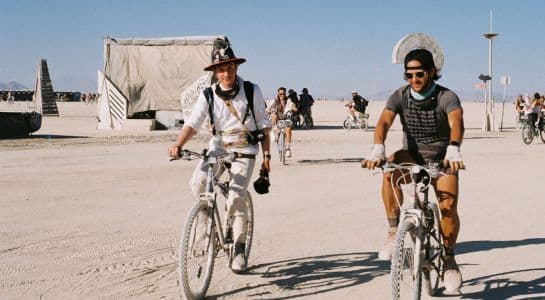
Pick up in San Francisco. Burning Man puts San Francisco at about 350 miles from the event, and our station is on Brannan Street in SoMa. Its own Burner Express figure for the return leg is eight hours. Build in a night’s stop rather than driving it straight, and use the drive to fill water and propane while you still have towns.
Do not let a navigation app route you onto Jungo Road. Burning Man’s warning is that it “is not recommended for passenger vehicles or RVs” and “will puncture all of your tires.” Apps offer it because it looks shorter on a map.
Worth knowing before you are sitting in line:
Open camping runs through the blocks between H and K Streets on a first-come basis. RVs should sit along the internal edges of a campsite rather than lining main streets. The area past K Street between 2:00 and 5:00 is reserved for walk-in camping, and no vehicles are permitted in it.
Historically six to nine hours just to reach pavement, and Burning Man advises allowing up to 12 hours to reach the Reno airport during peak departure. That is the normal case. The abnormal case is what should set your rental dates.
In 2023, close to an inch of rain fell during the event. A shelter-in-place order went out on the Saturday and a driving ban held until Monday afternoon. At peak, the five-mile drive to pavement took around seven hours, and only off-road vehicles could move at all. Some people walked out.
In 2025, wind gusts over 45 mph sustained over a long period closed site access for about two hours, and entry waits ran past seven hours once the gate reopened.
Neither situation is negotiable, and neither cares about your return date. Book one to two buffer days after the event ends rather than a return for the day Exodus begins. With unlimited mileage those extra days are the cheapest part of the trip, and they cost far less than a late return or a missed flight.
Exodus uses a system called pulsing, where lines of vehicles wait with engines off and move forward about a mile each hour. Burning Man is explicit that pulsing “does not get you out of the city any faster or slower.”
What does shorten the wait is leaving before the Man burns, or waiting until Tuesday morning. Check the BRC Dashboard and tune to BMIR 94.5 FM or GARS 95.1 FM for live conditions.
Four questions to ask us, and three things that are on you. None of them takes long, and each one closes a gap that is expensive to discover on Gate Road.
It is also worth knowing what your rental does and does not cover before you go, which our guide to RV rental insurance sets out.
Then pack for the vehicle rather than the campsite: water jugs for the shortfall, one-ply toilet paper, painter’s tape and mesh for the vents, a HEPA filter, cash for pump-outs, and more ice than you think.
Treat the 350 miles from San Francisco as travel rather than transit, and give yourself one night on a hookup afterwards.
The corridor through the Sierra and out into the Nevada basin rewards a night’s stop, and it gives you a place to fill water and propane without doing it in a hurry.
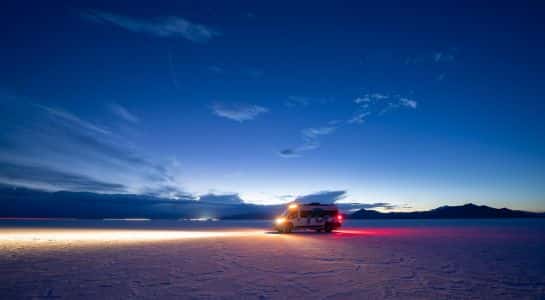
The stronger case is the back end. After nine days of alkali dust, one night at a campground with a shower and a hookup does more for you than another 500 miles, and it is also where the clean-up gets easier.
Pyramid Lake sits on the alternate route back toward Reno. From there, the Sierra, Lassen, and the northern California coast are all within a day’s drive, and the RV is finally doing the thing it was built for: parked somewhere green, plugged in, with the tanks emptied and the doors open. If you are staging the night before pickup, our picks for camping near San Francisco cover the closer options.
One routing note if you are picking up in Las Vegas: the US-95 route north runs along the eastern edge of Death Valley National Park, which our rental terms exclude between June 1 and September 30. Ask us for a compliant route before you set off.
Everything that goes wrong on the playa goes wrong slowly and then all at once. The tank that was fine on Tuesday. The battery that held up until the third still afternoon. The return date booked for the morning a driving ban started.
So do the arithmetic before you book. Nine days, 1.5 gallons per person per day, no refills, nothing to plug into, a battery you should not run below 30%.
Match the RV to those numbers, carry the difference, sort the generator, park where you can leave, and add two days on the end. Then the only thing left to plan is what you do out there, which is the part nobody needs a guide for.
Your remaining options are the official Ticket Transfer Tool or a face-value purchase from another participant. Burning Man sells Vehicle Passes only alongside tickets, while supplies last, and states that access to buy one is not guaranteed. Buy the pass in the same transaction as your ticket if you can.
You do. roadsurfer can send the mobility service, but the recovery cost sits with the renter. Our festival guidance asks you to park only where the ground is clearly passable and where you can drive back out. In 2023 a driving ban held until Monday afternoon and only off-road vehicles could move.
Fill propane in Reno or Sparks, because no official source lists a vendor past Fernley. Confirm the tank is full at pickup, and treat anything beyond Fernley as unavailable rather than merely inconvenient. Reno has several suppliers, though none publish Burning Man-week hours.
Ice, and nothing else. Burning Man states that no food or sundry items are sold anywhere in the city, and participant commerce is prohibited. Coffee is gifted by camps rather than sold. Ice is available at 3 o’clock, 9 o’clock and Center Camp.
Not before 12:01 a.m. on the opening Sunday, and arriving earlier means being turned away. Burning Man directs early arrivals to an Opening Night Staging Lot, with no penalty and no earlier entry, and warns against parking on the roadside to wait. Setup Access Passes are only for camp builders, artists and pre-event volunteers.
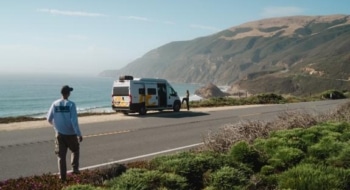
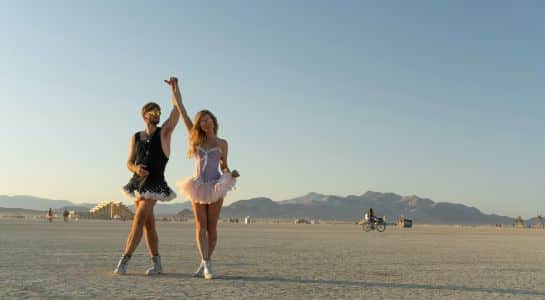
Nine days, no hookups, and one shot at getting the vehicle right. Match the RV to your water math, sort the generator, park where you can leave, and add two buffer days on the end.
Unlimited mileage on every US rental, so the drive out and the recovery night cost you nothing extra.
Find your camperTravel smarter with roadsurfer.
Trusted by thousands of travelers worldwide.
✓ Backed by 20,000+ Google reviews
✓ Built for families, couples & adventurers
✓ Inspiration & exclusive deals for subscribers