

Extended Trips

Meili Wyss • Last updated: June 30, 2026 • 9 min read
Texas is too big to see in one trip, but these twelve things to do in Texas are worth building a road trip around, from the Alamo and the San Antonio River Walk to Big Bend National Park and a handful of strange roadside detours in between. Each one includes what it actually costs, how long to plan for, and which nearby stop it pairs with best, so you can map your own route instead of following someone else’s day-by-day plan. Renting an RV makes this kind of trip easier, since you can chase down a strange stop without worrying about hotel bookings or rental car limits along the way.
Texas is known for being big, but the more interesting truth is how much variety that size holds. In one road trip you can stand in a desert dark enough to see the Milky Way without trying, watch real cowhands drive longhorns down a city street the same way they have for over a century, float a spring-fed pool in the middle of nowhere, and eat barbecue people fly in for. That range, history, wilderness, food, and a few things that are genuinely strange, is what actually defines Texas, and an RV is the easiest way to chase all of it down without losing a day to hotel bookings in between.
Best for: history buffs and anyone who wants to understand Texas before they see the rest of it.
Start in San Antonio, where Texas history really begins. In 1836, a small group of Texan defenders held this mission against a much larger Mexican army for thirteen days, buying just enough time for the rest of Texas to declare independence elsewhere. Every defender died when the walls finally fell, but the delay worked, and six weeks later Texas won its independence for good. The building itself is smaller in person than the movies make it look, which somehow makes the story hit harder once you’re standing in it.

Best for: an easy evening walk after a day of sightseeing.
From the Alamo, it’s a short walk down to the River Walk, a network of pedestrian paths built one level below the actual streets of downtown, following the bends of the San Antonio River instead of a city grid. You lose all sense of traffic and city noise down there, and every restaurant and hotel along it was built facing the water instead of the road, so what you actually see is patios and string lights where you’d normally find loading docks. Plenty of American cities have built their own “riverwalk” since, but this is the original.

Best for: anyone who wants a genuine sense of discovery, not just a scenic stop.
Just north of San Antonio, on the way toward the Hill Country, is one of the strangest finds in Texas. In 1960, four college students got permission to explore what they thought was a small cave on a rancher’s property, and crawled through a narrow gap into two miles of passage no one had ever seen, with one of them later calling it the biggest adrenaline rush of his life. That underground system is now the Discovery Tour, the original cavern, with large rooms, big formations, and an easier walk. A second, newly opened cavern called Hidden Wonders takes you somewhere completely sealed off until 2023, ending in a massive chamber called The Ballroom with a music and light show. Neither tour is really the wrong choice, and a combo ticket lets you do both in one visit.

Best for: families and anyone road-tripping with kids who need to burn off energy.
West of San Antonio, the Hill Country opens up, and the Frio River near Garner State Park is where generations of Texas families have spent their summers. There’s a public access spot about ten minutes from the park entrance, a shallow section calm enough to sit in a lawn chair, and a deeper area downstream with a rope swing. Garner State Park itself is known for its summer dances, an outdoor dance pavilion tradition that’s been running for generations, and it’s worth timing a summer visit around one.

Best for: foodies who consider a legendary meal worth planning a whole day around.
From the Hill Country, the drive north to Austin trades river time for one of Texas’s most argued-over questions: where to get the best barbecue. Franklin Barbecue has been called the best brisket in the country by critics who don’t agree on much else, and the line itself has become part of the experience, with people showing up before sunrise for a restaurant that doesn’t open until 11am and frequently sells out by early afternoon. If a multi-hour wait isn’t your idea of a vacation, Lockhart is the better day trip, a small town built around its own famous pits, including Smitty’s Market and Black’s.

Best for: Old West fans and anyone who wants real cowboy culture, not a costume version of it.
Continue north from Austin and the city eventually gives way to cattle country. A stockyard was once the place where cattle from ranches across Texas were gathered, sold, and shipped out, and Fort Worth’s was one of the busiest in the country in the late 1800s, which is why the city still calls itself Cowtown. Twice a day, that history gets reenacted for real instead of staged for a show: real cowhands on horseback drive a herd of longhorns straight down the street, the same basic choreography that once moved cattle through here every day. The surrounding district is packed with western shops, saloons, and Billy Bob’s Texas, billed as the world’s largest honky-tonk.

Best for: road trip photographers and anyone who collects strange American roadside stops.
From Fort Worth, it’s a long haul west into the Panhandle, and the reward is something genuinely strange. Ten Cadillacs, half-buried nose-first in a field outside Amarillo since 1974, were commissioned by an eccentric local millionaire to honor the rise and fall of the Cadillac tailfin, and visitors are encouraged to spray paint their own mark on the cars. This isn’t a stop that needs an hour, pull off, leave your mark, take the photo, get back on the road. It also sits just off the old alignment of Route 66, so check out our Route 66 road trip itinerary.

Best for: Old West fans who want the wilder, less-tamed side of that story.
A short drive south of Amarillo, the strangeness of Cadillac Ranch gives way to something with real weight behind it. Most visitors don’t expect Texas to have its own bison herd. Bison once numbered in the tens of millions and were the foundation of life for Plains nations for thousands of years, until commercial hunters wiped out nearly the entire population in a couple of decades, leaving only a few hundred bison left anywhere by the 1890s. One of the handful of herds that saved the species started right here, when rancher Charles Goodnight’s wife couldn’t sleep listening to orphaned calves cry, and convinced him to rescue a few in 1878. The bison roaming Caprock Canyons today are direct descendants.

Best for: road trippers who think a gas station stop should be part of the fun, not just a pit stop.
The drive from the Panhandle toward Far West Texas is long, and that’s exactly when a Buc-ee’s earns its reputation. What started as a single small store in Clute, Texas, in 1982 has grown into something closer to a theme park than a gas station, with locations stretching past 75,000 square feet, more than 100 fuel pumps, a wall of beef jerky flavors, and bathrooms so clean they’ve genuinely become part of the brand’s reputation. Most Texans will tell you a road trip isn’t complete without at least one stop for brisket sandwiches and a giant stuffed beaver. Don’t plan around it, just let it happen.

Best for: anyone road-tripping through West Texas who needs to cool off somewhere that isn’t a hotel pool.
Deep into Far West Texas, the landscape turns to desert, and Balmorhea is where you cool off in the middle of it. It’s a 1.3-acre spring-fed pool, cold and clear enough that you can see straight to the bottom even in the 25-foot deep end. Unemployed young men built it by hand in the 1930s as part of a Great Depression jobs program, carving the limestone and shaping adobe brick themselves, and the spring beneath it is home to a tiny fish found nowhere else on Earth. It’s one of those places that looks fake in photos until you’re standing in it.

Best for: road trippers who want a genuinely strange photo stop.
South of Balmorhea, on the way toward Marfa, the desert delivers one more surprise. Prada Marfa looks like a mistake the first time you see it, a fully built, fully stocked Prada storefront standing alone on Highway 90, real and intentional since the 2005 art installation went up. The shoes inside are deliberately mismatched and the purses have no bottoms, so there’s nothing complete to steal. Most people see it on the way into or out of Marfa, the small art town that makes a natural overnight stop before continuing south.

Best for: travelers who want total disconnection and don’t mind a long drive to get it.
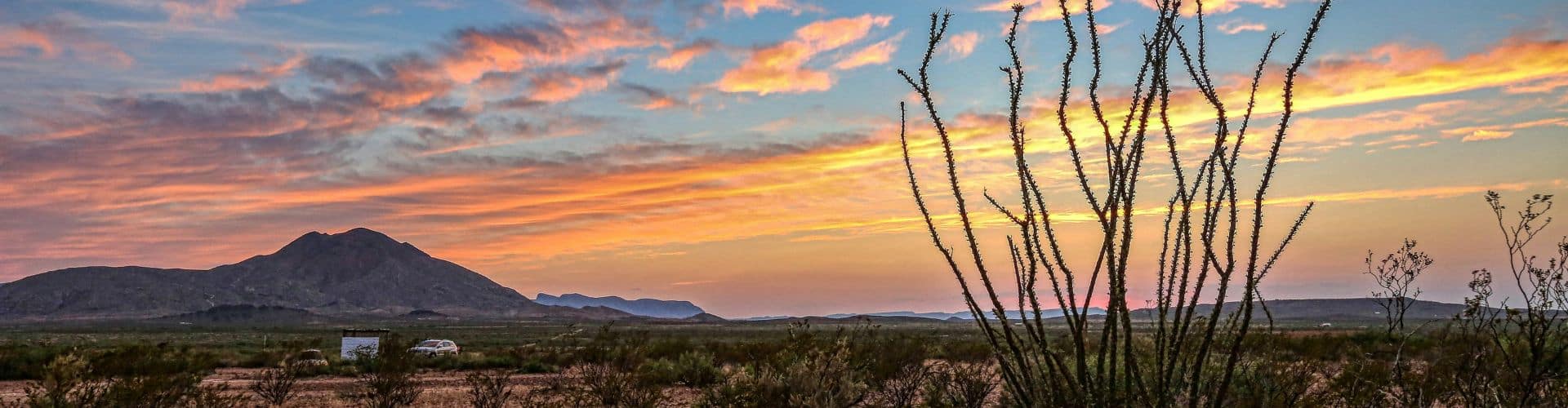
From Marfa, the final stretch south leads to the trip’s real payoff. Big Bend National Park rewards anyone willing to drive deep into West Texas, with remote mountains, river canyons, and some of the darkest night skies left in the country. Locals warn against visiting in July or August, when the heat is intense enough to take the romance out of it. Spring and fall are the better windows, and they’re also when campsites are easiest to find. Terlingua, a sun-bleached former mining town right at the park entrance, is worth a stop for its sunsets and the historic Starlight Theatre.

Looping through San Antonio, the Hill Country, Austin, Fort Worth, the Panhandle, and Far West Texas covers a lot of ground, but that’s the point. The things to do in Texas that actually stick with you are rarely the ones closest to the highway, they’re the ones worth a detour: a mission that bought a state its independence, a gas station that became a cult favorite, a herd of bison that almost didn’t survive, a desert pool built by hand during the Depression. An RV makes that kind of trip easier, since you can chase down a strange stop without losing a day to hotel bookings in between, and string together a route that’s entirely your own.
Most of these stops are easy to reach in a standard RV, but a few are worth planning around. Big Bend National Park and Caprock Canyons both have RV-friendly camping spots, though they can fill up fast in spring and fall, so check current site availability through the National Park Service before you go. Smaller stops like Prada Marfa, Cadillac Ranch, or a Buc-ee’s pit stop have plenty of parking and don’t require reservations.
The best time to road trip through Texas is spring or fall, generally March through May and September through November. Summer heat, especially in West Texas and the Panhandle, can make hiking and long drives uncomfortable, and several locals specifically warn against visiting Big Bend in July or August.
Yes, Texas is genuinely well suited to an RV road trip, more so than most states its size. The distances between stops are long, but having your own RV means you can stop wherever something catches your eye, cook your own meals between cities, and avoid booking a hotel for every single night of a multi-week trip.
A loop connecting San Antonio, the Hill Country, and Garner State Park can be done comfortably in three to four days. Add two to three more days if you want to detour out to Big Bend or up to the Panhandle, since both regions are several hours from the central Hill Country corridor.
Most of these stops are free or low-cost, with a few exceptions worth budgeting for. State and national park entry fees typically run $5 to $30 per vehicle, a Franklin Barbecue lunch runs $30 to $40 a person, and Natural Bridge Caverns tours cost $25 to $30 per person.
Travel smarter with roadsurfer.
Trusted by thousands of travelers worldwide.
✓ Backed by 20,000+ Google reviews
✓ Built for families, couples & adventurers
✓ Inspiration & exclusive deals for subscribers