


Hiring a Campervan: What to Know Before You Book

Daisy Hammersley • Last updated: 16 March, 2026 • 8 min read

This guide focuses on what actually affects campervan rental pricing, how costs add up in practice, and which details tend to surprise first-time renters. If you want broader context on campervan and motorhome types and how different setups compare, the campervan guides cover vehicle types, layouts, and typical trade-offs.

Is Hiring a Camper the Right Choice?

Hiring a campervan lets you experience campervan travel without committing to ownership costs like maintenance, storage, insurance, or depreciation. Instead of guessing how campervan travel might feel, you get real insight into how you actually move, spend, and live on the road.

Most travellers searching for campers for hire are trying to answer three questions: how the process works, what it costs, and whether it makes sense for their trip. This guide helps answer those questions early so you can make informed decisions before you are already on the road.


What to expect if you decide to hire

If you’re hiring a campervan or motorhome for the first time, it helps to understand the basic requirements and how the process works before booking. While details vary by country and provider, most rentals follow the same general rules.

How old do you have to be to rent a campervan?

  • Minimum rental age typically falls between 18 and 21, depending on the country.
  • Most providers also require at least 1–2 years of licensed driving experience.
  • If you’re checking eligibility for a specific provider, the age requirements for roadsurfer campervans show how this varies by region.

What license do you need to rent a campervan?

  • Most campervans can be driven with a regular driver’s license, especially vehicles under 3.5 tons.
  • For provider-specific rules, including vehicle weight limits and special cases, see the license requirements for roadsurfer campervans.
  • Requirements can also change based on location or whether a temporary or provisional license can be used.

What documents do you need to pick up your campervan?

  • Bring a valid driver’s license plus a passport or government-issued ID.
  • Most providers require original documents rather than photos or scans.
  • You’ll typically need a credit or debit card with enough available funds for the security deposit.
  • For example, you can see the specific pick-up requirements for roadsurfer to get a sense of how this typically works.

How does campervan pick-up work?

  • Most campervan pick-ups follow a similar flow: arrive with your original documents, review the vehicle condition, and confirm any existing damage.
  • roadsurfer outlines its handover steps early in the campervan pick-up overview, which mirrors how many providers handle the process.
  • You’ll also get a short walkthrough of the most important campervan functions before departure.


How Much Does It Cost to Hire a Campervan?

There isn’t a single flat rate for renting a camper. Pricing depends on a few core factors, which is why costs can vary so widely from one trip to the next.

Family standing together in front of a roadsurfer RV rental surrounded by tall trees in a forest

What prices usually look like

  • Campervan pricing varies widely: campervans range from relatively affordable older models to newer, sprinter-style builds that sit in the mid to higher price range. If you want a clearer sense of why pricing varies so much within this category, our campervan rental guide breaks down costs, features, and when this type of campervan actually makes sense.
  • Motorhomes skew higher, but not always: Larger motorhomes often list at higher daily rates due to size and sleeping capacity, though older models can sometimes undercut newer, premium campervans.
  • Peak vs off-peak pricing is immediately visible: Summer, holidays, and school breaks push listed daily rates higher across all vehicle types, while spring and fall tend to show lower advertised prices.

What actually changes what you pay

These factors tend to matter more than the listed daily rate.

  • Rental length: Longer trips often reduce the nightly rate, while short rentals can be proportionally more expensive.
  • Mileage structure: Some rentals include mileage caps or charge per mile, which can quickly push up the total cost on longer routes. Other providers offer unlimited mileage, which can make budgeting simpler if you plan to cover a lot of ground. You can see how this works with roadsurfer’s approach in the unlimited mileage FAQ.
  • Vehicle age and configuration: Newer builds or upgraded interiors can raise costs even if the size stays the same.


What’s Usually Included — and What Costs Extra?

Campervan and motorhome rentals usually include the vehicle itself, fixed interior features like beds and seating, core onboard systems, and legally required safety equipment. For a concrete example of what that typically looks like in practice, the what’s included with your campervan rental FAQ shows exactly which onboard equipment and systems are provided.

The vehicle & fixed interior

This includes the vehicle itself, built-in beds, seating, storage, and any permanently installed kitchen or bathroom components the model comes with.

Core onboard systems

Most rentals include essential systems such as electricity, basic climate control, and a kitchenette or bathroom if the vehicle is equipped for it

Legally required safety gear

Items like emergency equipment and standard safety features are included because they’re mandatory, not optional.

Functionality, not full setup

What’s included is usually enough to use the campervan, but not necessarily everything you’d want for cooking, sleeping, or outdoor use without add-ons.


Choosing the Right Campervan Size for Your Trip

Campervan size has a bigger impact on comfort and cost than most people expect. Bigger isn’t automatically better, and smaller isn’t always cheaper overall. The right fit depends on how many people are traveling and how you plan to move day to day. If you want a clearer breakdown of how different sizes compare, this campervan guide explains how campervans, sprinter-style vans and motorhomes differ in space, driving feel, and use cases.

Smaller campers (often suited for 1–2 people)

Smaller setups work well for solo travelers or couples who prioritize flexibility.

  • easier to drive and park
  • lower base rental rates
  • limited interior space for luggage and downtime

These are a strong fit for shorter trips or itineraries where you’ll spend most of your time outside the vehicle.

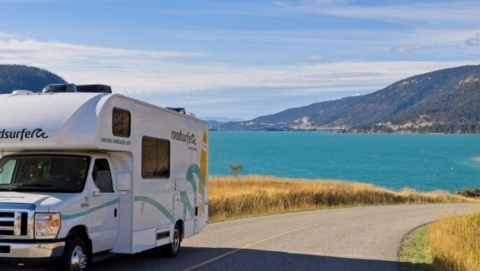
roadsurfer RV driving on coastal road

Mid-size to larger motorhomes (better for groups)

Larger motorhomes are built for comfort when more people are traveling together.

  • more sleeping space and storage
  • better separation between living areas
  • higher daily rental costs and fuel use

For families or groups, a larger motorhome can make longer trips feel significantly less cramped.

Size vs comfort trade-offs

Smaller campers can feel restrictive on long drives or in bad weather, while larger motorhomes offer more room to move around but require more confidence behind the wheel. In practice, the best choice is usually the smallest campervan that still feels comfortable for how you actually travel.

If you want a more focused breakdown of when smaller campervans genuinely save money and when they don’t, the small campervan rental guide goes deeper without overcomplicating the decision.


Final thoughts: Is renting a campervan right for your trip?

Renting a campervan is less about finding the cheapest daily rate and more about choosing a setup that matches how you actually plan to travel. Once you factor in mileage, trip length, comfort needs, and a few first-time considerations, the right option usually becomes clearer.

For many travelers, renting is the easiest way to test what works without long-term commitment — and often the simplest way to travel with flexibility, control, and fewer logistical trade-offs.

If you understand the real costs upfront and choose a camper that fits your route and group size, renting tends to be a practical, low-friction way to travel rather than a gamble.

Man sitting in the driver’s seat of a camper van, capturing the experience of renting a camper for a road trip

FAQs: Hring a Campervan

Often, yes – especially for groups or longer trips where you combine transport and lodging.
  • Best case: 2-4+ travelers on a multi-day route where you’d otherwise book multiple rooms and rental cars.
  • Reality check: Quick weekend trips can be closer in price once you add fuel, camping spots, and extras.
  • Compare apples-to-apples: Use our campervan rental vs. hotels & flights cost comparison to sanity-check your specific trip.

Your base nightly rate isn’t the full price – extras depend on how and where you travel.

  • Common add-ons: Mileage (if capped), insurance upgrades, one-way fees, and pet fees (if applicable).
  • Trip costs: Fuel, camping spots, and tolls/parking can swing the total more than people expect.
  • Deposits: Plan for a security deposit/hold and any post-trip cleaning or damage charges if relevant.

Pick the smallest campervan that comfortably fits your people, sleep setup, and driving confidence.

  • 1–2 travelers: A campervan or sprinter-style is usually easiest to drive, park, and live out of day-to-day.
  • 3–4+ travelers: A larger motorhome is often a better call for separate beds, more storage, and breathing room.
  • Trade-off: More space usually means more driving/parking effort and higher fuel use.

Book early for peak season – last-minute works, but you’ll sacrifice choice and price.

  • Peak dates: Plan 2–4+ months ahead for summer, holidays, and popular routes.
  • Shoulder season: 4–8 weeks is often enough to get a solid option without overpaying.
  • Last-minute: Totally possible, just expect fewer layouts and pickup locations.

Not necessarily – many RV rentals allow cross-border travel, but there are important limits.

  • Cross-border rules depend on where you pick up the campervan and the insurance coverage included with your rental.
  • In North America, travel is typically allowed within the U.S. and Canada, but not into Mexico.
  • In Europe, most EU and Schengen countries are permitted, while some destinations have restrictions.
  • Before planning an international route, it’s worth checking the cross-border travel rules for your pick-up location.

Yes – start with a smaller campervan and keep your first driving day simple.

  • Easiest entry point: campervans and sprinter-types usually feel closest to driving a large SUV/van.
  • Reduce stress: Avoid tight city centers, arrive at your camping spot before dark, and plan shorter distances.
  • Confidence hack: Do a 10–15 minute practice loop after pickup to get comfortable with turns and braking.

Want to dive deeper on campervan rentals?

From picking the right campervan or motorhome to planning routes and camping spots, our campervan guides hub pulls everything into one place so you don’t have to piece it together from scratch.
Travel smarter with roadsurfer.
Trusted by thousands of travelers worldwide.

✓ Backed by 15,000+ Google reviews
✓ Built for families, couples & adventurers
✓ Inspiration & exclusive deals for subscribers

  • For information on how roadsurfer handles your data, please refer to our Privacy Policy. You can unsubscribe at any time.