Travel Smart

Meili Wyss • Last updated: August 5, 2026 • 13 min read
Most camping spots sit empty in January, which is the best argument for winter RV camping. The ones that stay open are quiet in a way they never are in July, and a heated RV turns a freezing night into something closer to a cabin stay. You can park that cabin next to a snowfield or a saguaro, depending on your taste.
You don’t need to own an RV to do it, and you don’t need years of experience. You need a realistic sense of what cold does to a vehicle, and a plan for water.
This guide covers both kinds of winter trip, the snow chase and the great southern escape, plus the systems and safety habits that matter. If you’re renting, we’ll flag what changes for you along the way, and our other RV travel guides cover the year-round basics this one takes as read.
Yes. A modern RV with a working furnace handles winter camping comfortably in most U.S. conditions, including nights well below freezing. What actually limits a winter trip is the water system, which camping spots are open, and what the roads are doing. Manage those and winter becomes a season worth planning around rather than avoiding.
It helps to know which trip you’re planning. Winter RV camping splits into snow trips, where cold is the point, and sun trips, where the goal is to drive south until you find sixty degrees. The gear and the daily routine differ for each.
An RV in winter is not a house in winter. It’s better in one way, since you can move it when the forecast turns, and needier in most others.
There’s no single cutoff, but sustained freezing temperatures are the line where preparation starts deciding everything. Overnight dips below 32°F are manageable with the furnace running. Extended hard freezes, when the daytime high never climbs above freezing, demand winter equipment and a water plan.
| Overnight lows | What to expect | Who it suits |
|---|---|---|
| Above 32°F | Comfortable with standard heating. Water systems unaffected. | First-timers |
| 20 to 32°F | Furnace runs steadily. Water lines need attention if lows persist past a day. | Prepared beginners |
| Below 20°F | Serious propane consumption, freezing risk to tanks and lines, possible chain controls on mountain routes. | Experienced winter campers |
Freezing risk builds with time, not just temperature. RV water lines start needing precautions around 35°F, and at a steady 32°F it takes roughly 24 hours for pipes to freeze, faster as the temperature drops further.
A single cold night between mild days is rarely a problem. A week that never thaws is a different trip.
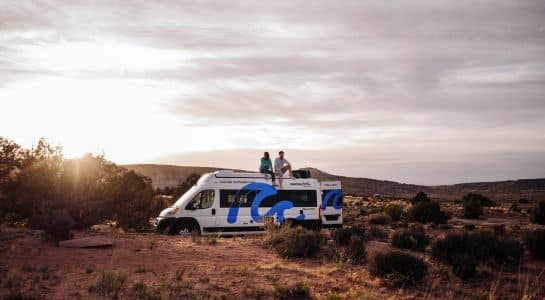
Decide which winter you want before you plan anything else. Snow trips mean skiing from your door and mornings that start with scraping ice. Sun trips mean desert camping spots and flip-flops in January. Both count as winter RV camping. Only one requires a shovel.
| Factor | Snow trip | Sun trip (snowbird) |
|---|---|---|
| Destinations | Mountain towns, ski areas, winter national parks | Arizona, southern California, Texas, Florida |
| Weather | Sustained freezing, snow on roads | Mild days, chilly to freezing desert nights |
| Difficulty | High. Full winter systems in play. | Low. Standard camping with warm layers. |
| Signature gear | Snow chains, insulation, extra propane | Sunscreen, an awning, patience for the crowds |
| Best for | Skiers, snow hikers, solitude seekers | First-time winter campers, long-stayers |
The sun trip is the gentler teacher. Desert nights still drop below freezing after mild afternoons, so you practice cold-weather habits with training wheels on. If this is your first winter trip, go south. The mountains will still be there next year.
The furnace does most of the work. An RV furnace will hold a comfortable cabin through a freezing night, so heat itself is rarely the problem. Fuel and battery are, along with how fast the warmth leaks back out and how you dress for a vehicle that cools quickly once the heater cycles off.
Most RV furnaces are forced-air units. They burn fuel in a sealed chamber that vents to the outside, and a fan pushes the warm air through ducts into the cabin. Because the exhaust leaves the vehicle, a furnace in good working order doesn’t put fumes or moisture into the air you’re breathing.
It needs two things at the same time: fuel to burn, and 12-volt battery power to run the fan and the control board. So “propane or electric” is the wrong question. It’s both, and losing either one stops the heat.
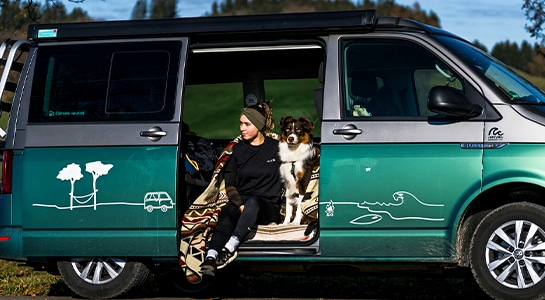
Starting it is usually just the thermostat. Set it above cabin temperature and the fan spins up before the burner lights. Most modern RVs use electronic ignition, though some older units have a pilot light you light by hand. If you’re renting, ask to be shown at handover. It takes thirty seconds, and this is the one system you don’t want to be learning about at midnight.
Both drain faster in winter than people expect, and the furnace is the reason for both.
Propane consumption tracks how hard the furnace has to work: the outside temperature, how well the RV holds heat, where you set the thermostat, how often the door opens. No single figure fits every RV on every night, so plan on using noticeably more than a summer trip would need, and ask your pickup station about tank capacity and where to refill along your route.
A few facts about propane itself that surprise people:
The battery is the quieter problem. The furnace fan draws power every time the heater cycles, and colder nights mean more cycles, so a night without an electric hookup is what actually strands people. Book camping spots with power for the coldest nights, top the battery up by driving during the day, and set the thermostat lower overnight than you would at home. Never run the engine overnight to charge the battery or to add heat.
Cover the windows at night, since glass is where the warmth goes. Reflective covers work and so does a folded towel. The floor is the other leak, so put rugs or mats down before the first cold evening. Park nose-away from the wind if you get to choose, and don’t modify the vehicle if it’s a rental, which you won’t need to anyway.
Ventilation matters more than it feels like it should. Several people breathing in a sealed, heated cabin put real moisture into the air, and cooking adds more, which by morning shows up as water on cold glass and damp cushions. Crack a roof vent even at 20°F, run the vent fan while you cook, and wipe the windows down when you get up.
Dress for the cabin, not the thermostat. An RV loses heat fast once the furnace cycles off, so the temperature you go to sleep in is not the temperature you wake up in. Bedding rated below the forecast rather than at it does more for a cold night than turning the heat up, and it doesn’t cost any propane.
Below freezing, an unprotected RV water system will eventually freeze, lines first and exposed tanks close behind. Owners fight this with heated hoses and tank heaters. Renters face something different, and it changes the whole water plan: in winter, your rental may arrive winterized.
Winterized means the RV’s water system has already been prepared for freezing weather. The fresh water system is drained and taken out of service, with antifreeze protecting the waste side. roadsurfer winterizes its North American vehicles dry, station by station, depending on the local climate. Pick up in a cold region in January and there’s a good chance the fresh water system is deliberately empty. This is not a malfunction. It’s what protects the plumbing, and your deposit, from a burst pipe.

So plan your water the way people in cold climates always have. Carry it. Rigid jugs or collapsible canisters, stored inside the heated cabin where they can’t freeze, cover drinking and washing up.
It’s lower-tech than plumbing. It also never bursts.
Not in the RV, most likely. If the fresh water system is winterized, the shower is out of service along with the tap, and even in a vehicle with working plumbing a winter shower drains the fresh tank fast and puts several gallons of warm water into the grey tank. Three realistic options:
That last point is a safety one, not a comfort one. Hypothermia can develop above 40°F once you’re wet, so a sponge bath in a cold cabin is worth doing with the furnace running and dry clothes already within reach.
Waste is the other half of the question, and it’s worth asking about directly. Find out from your station whether the grey and black tanks are in service for your dates and where you’re expected to empty them. Dump stations follow the same seasonal pattern as everything else in winter, so plan on fewer of them being open than the map suggests.
Winterizing is not the same as winter camping prep. Winterizing protects the vehicle’s plumbing from cold. It doesn’t heat the cabin or plan your route. If you want to know what the process involves, or you own an RV and need to do it yourself, our guide to winterizing an RV walks through it step by step.
Ask your pickup station what applies to your vehicle and dates. Winterization is a station-level decision based on local weather, so a San Diego pickup and a Denver pickup can come with different water situations in the same week.
Two risks deserve more respect than the average packing list gives them: carbon monoxide and hypothermia. Both are preventable with habits you can run at the camping spot.
Carbon monoxide is odorless, and winter is its season. Closed windows and a running heater are the setup. Test the CO detector on day one, and don’t camp without a working one. Never run the engine or a generator overnight for heat, which is the single most dangerous shortcut in cold-weather camping and the reason the CDC publishes separate guidance on generators. After snowfall, walk around the RV and clear the furnace exhaust and vents.
Hypothermia doesn’t wait for arctic conditions. It can develop above 40°F when you’re wet from rain or sweat. Watch for the signs the CDC lists in adults:
The response: get the person warm and dry, warm the core first (chest, neck, head), and offer warm non-alcoholic drinks if they’re alert. Below 95°F body temperature, call 911. Wet-and-cold is the combination to fear, which makes the Pacific Northwest’s damp winters sneakier than Montana’s dry ones.
Fewer places than in summer, and the ones that stay open often run reduced services. Many camping spots close entirely for the season. Others stay open but shut off their water systems for winter, which means no fill-ups and sometimes no flush toilets. The National Park Service says it plainly: check opening dates with the specific park, and talk to a ranger when planning a winter visit.
So verify before you drive. Check the park or camping spot’s own website for seasonal dates, look up winter availability on recreation.gov for national parks, and call ahead if you’re arriving in a storm week. Our guide to RV parks covers what hookups and amenities normally include, which is a useful baseline for judging what a winter spot is actually still offering.
Assume nothing stays open just because it appears on a map.
Sun trips get the better end of this deal. The desert Southwest runs on winter visitors, and camping spots across Arizona, southern California, and Texas treat January as high season. On public land, the Bureau of Land Management’s Long-Term Visitor Areas host thousands of winter travelers on permits designed for stays of weeks or months. Quartzsite, Arizona is the famous one, and the same people come back to it every January.
Snow trips should aim for established camping spots near ski areas and winter-open park entrances, where plowed access is part of the service. Wherever you land, US roadsurfer stations operate through the winter, so a January pickup is a normal booking.
Slow down further than feels necessary and leave far more room than dry pavement needs. Then learn the chain rules before you point an RV uphill in a storm.
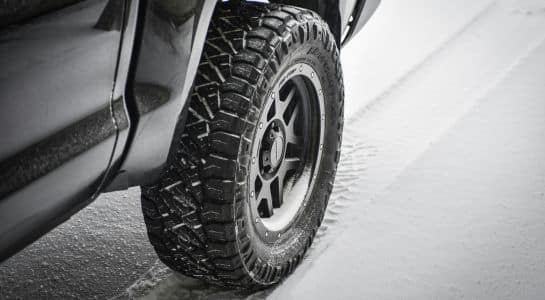
Mountain states enforce chain controls, and they apply to RVs. California’s system is the one to learn, because you’ll meet it on every Sierra crossing. R1 requires chains, with exceptions for passenger vehicles on snow tires. At R2, most vehicles need them, and while 4WD on snow tires is exempt, it must still carry a set. R3 is chains on everything with no exceptions, though roads usually close before it gets that far. Other mountain states run their own versions, so check the state DOT site for every mountain segment on your route.
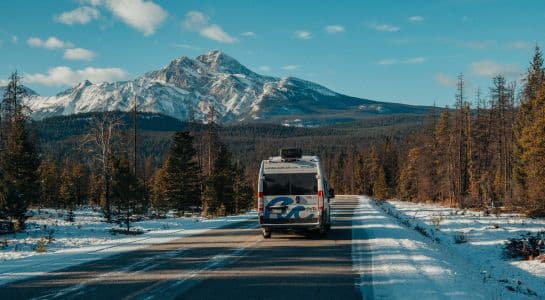
If you’re renting, chains are a bookable extra at select stations. In the US that currently means Los Angeles, Las Vegas, and San Francisco, and each station holds a limited supply. Book them when you book the vehicle rather than at pickup, because the extra can’t be added through your customer account within two days of pickup. For what winter-rated rubber actually does for you, our guide to snow tires breaks it down.
And the best winter driving technique available to anyone: wait. Most storms clear in under a day. A late start with coffee beats an on-time start with chains in the sleet.
Pack for the vehicle too, not only for yourself. These are the winter additions to a standard RV camping packing list, not a replacement for it:
Renting removes the expensive half of winter camping. The vehicle arrives maintained and winter-prepared for its region, the winterization decision has already been made by people who know the local climate, and at the end you hand back the keys instead of paying for storage and a spring de-winterization. Heating is standard equipment in roadsurfer camper vans. You never buy chains or tank heaters for a two-week trip.
What stays yours is the judgment: choosing the route, reading forecasts, booking camping spots that are actually open, running the daily cold-weather habits, and managing water jugs if your vehicle is winterized dry.
Four questions to ask your station at booking. Is this vehicle winterized for my dates, and what does that mean for water and waste? How do I start the heater, and what does it run on? Are snow chains available here? And how long should the battery hold up overnight without a hookup? One call at booking removes most of the guesswork above, and if you haven’t rented before, our guide to what to know before you book covers everything that isn’t winter-specific.
Yes, once temperatures stay below freezing long enough. A steady 32°F takes about a day to freeze RV pipes, and colder nights shorten that window sharply. Precautions start around 35°F, and multi-day hard freezes are the real danger rather than one cold night.
Stop using the water system and let it thaw gradually in a heated space. Warm the cabin with the furnace and open cabinet doors so heat reaches the plumbing, and keep flames and heat guns away from the pipes. Check for leaks once water flows again, because a line can split while frozen and only show it after the thaw.
Yes, with the furnace running and a working carbon monoxide detector. The furnace is designed for overnight use and vents its exhaust outside. Never sleep with the engine or a generator running for heat, keep exhaust vents clear of snow, and read the CDC’s winter weather guidance for cold-exposure warning signs.
Often no, because in cold regions rental RVs are winterized with the fresh water system drained. roadsurfer winterizes North American vehicles dry, station by station, which protects the plumbing from freeze damage. Water jugs stored inside the heated cabin cover the gap, so confirm your vehicle’s status when you book.
Many do, but with fewer open sites and reduced services. Some parks close camping areas entirely for winter, while others stay open but shut off water. Seasonal dates are listed on the National Park Service camping pages, park by park.
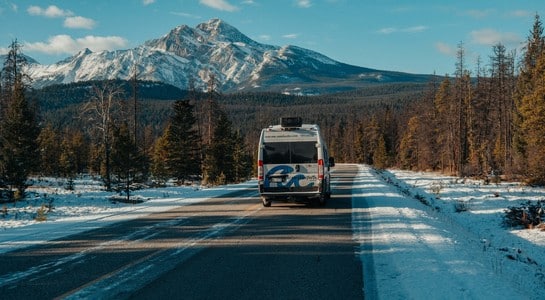
Winter asks for three things an RV trip in July doesn’t: a water plan, a forecast habit, and the patience to sit out a storm. None of them are hard. They’re just unfamiliar the first time, which is why the first winter trip feels like work and the second one feels like camping.
Go south for that first one. Keep it short. Let the routine get boring before you aim it at a mountain pass in February.
Find a winter-ready RVTravel smarter with roadsurfer.
Trusted by thousands of travelers worldwide.
✓ Backed by 20,000+ Google reviews
✓ Built for families, couples & adventurers
✓ Inspiration & exclusive deals for subscribers