

Travel Smart
Free Camping in the US
Meili Wyss • Last updated: July 20, 2026 • 9 min read
Free camping in the US is real, legal, and easier to pull off than most first-time travelers expect. Millions of acres of public land are open to overnight stays at no cost, and renting a camper van is one of the best ways to use them. You bring your own bed, kitchen, and water, so you can sleep almost anywhere the rules allow.
This guide covers where you can camp for free, the rules that keep it legal, how to find good spots, and what changes when you sleep off-grid in a van. If you’re new to van travel, our broader guide on RV camping covers the fundamentals.
You can camp for free on most public land managed by federal agencies, plus a handful of business lots and near-free membership networks. The main options break down like this:
The first two are the heart of true free camping. The rest are best treated as one-night stops between destinations rather than places to settle in.
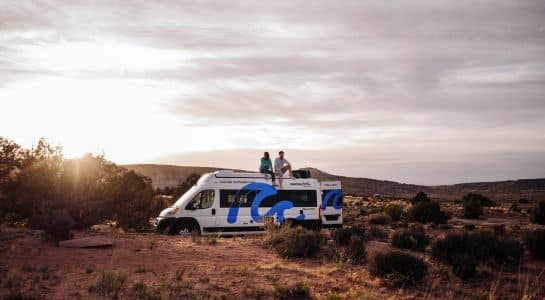
Yes. Camping for free on federal public land is legal and encouraged, as long as you follow each area’s rules. This style is called dispersed camping: camping outside of developed sites, with no fee and no amenities. It is the same activity RVers often call boondocking or free RV camping.
The trade-off is simple. You give up hookups, restrooms, and trash service. In return, you get quiet, space, and no bill. The rules that come with it exist to protect the land and keep it open, so treating them seriously is part of the deal.
The Bureau of Land Management (BLM) oversees roughly 245 million acres, most of it in Western states, and dispersed camping is free on the majority of it. No permit is needed for a stay of under 14 days. You can generally camp for up to 14 days within any 28-day period in one area.
Once you hit that limit, you have to move, and many field offices require you to relocate 25 to 30 miles away before setting up again. Stay on existing roads and pull-offs rather than driving across open ground, and use spots that show signs of previous use instead of flattening a fresh patch of desert.
BLM stay limits and rules vary by state and field office, so check the local office before you go. It is the difference between a legal free camp and a ticket.
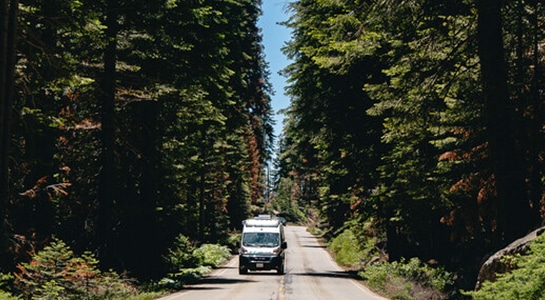
Yes. Dispersed camping is free and allowed in most national forests and grasslands, outside of developed sites and posted closure areas. Like BLM land, the typical limit is around 14 days, though some forests cap it shorter or require you to leave the forest for a set number of days afterward.
Two rules come up almost everywhere. Camp at least 100 to 150 feet from any water source to protect fragile stream banks, and keep your site within the forest’s set distance from the road. Dispersed sites have no toilets, no drinking water, no trash pickup, and no fire rings, which is exactly why there is no fee. Stick to paved and well-maintained forest roads your van can handle; our guide to the best RV size for national parks is a useful companion here.
Every forest sets its own specifics. Check the forest’s website or call a ranger district before you commit to a spot.
Beyond BLM land and national forests, free camping also turns up on national grasslands, some Wildlife Management Areas, and a limited number of state and county lands. Availability and rules swing widely here, and many of these areas restrict overnight use or require a free permit.
Because the rules are inconsistent, treat these as bonus options rather than your plan A. Confirm overnight camping is allowed with the managing agency before you rely on any of them.
When you are between destinations and just need a place to sleep, several businesses allow free overnight parking. These are one-night stops, not camping spots. Park level, stay inside your van, and leave in the morning.
Do not put out chairs, awnings, or leveling setups in a parking lot. Overnight parking survives on good behavior. The moment it looks like camping, stores start saying no.
[IMAGE NEEDED — 545×300 — an RV or camper van parked overnight in a business/truck-stop parking lot or highway rest area at night — searched: truck stop rv, walmart parking rv, highway rest stop, campervan city night, parking lot van night]
For a low yearly fee, two networks turn thousands of private locations into free places to stay. They are not technically free camping, but the per-night cost drops to zero once you join.
Harvest Hosts connects members with wineries, breweries, farms, and museums that host self-contained RVs overnight, usually with the expectation that you buy something. Boondockers Welcome is a network of hosts who offer space on their property to fellow campers. Both require a self-contained van, since neither offers hookups. If you travel often, the annual fee pays for itself in a few nights.
The fastest way to find free camping near you is a combination of camping apps and official land maps. The apps crowdsource thousands of free campsites; the official maps confirm which ones are legal to use.
Cross-check any spot against the official BLM or US Forest Service Motor Vehicle Use Maps, which show which roads and areas are open. Reviews that mention road condition help you avoid tracks a van should not take.
Free camping in a van means going fully self-contained: no electric hookup, no water spigot, no sewer connection. Your comfort depends on the systems you brought with you. A self-contained camper van like the Horizon Hopper is well suited to this kind of trip.
Manage your resources like they are finite, because they are. Fill your fresh water tank before you leave town, and know roughly how many days it lasts. Watch your battery, especially if you run a fridge or furnace overnight. Carry your gray water out and empty it at a proper dump station rather than dumping it on the ground.
Two more habits matter. Check cell coverage before you rely on a spot, and arrive in daylight. Finding a legal, level place to park is far easier before dark than after.
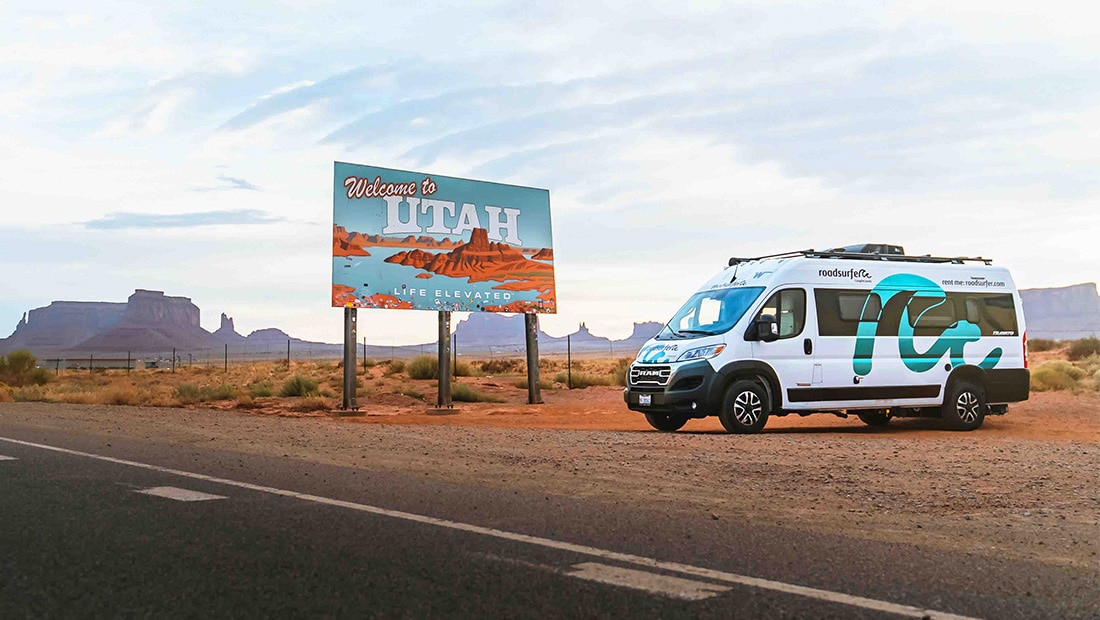
No. roadsurfer campers are built for paved and well-maintained public roads, not off-road driving or rough, unpaved tracks. Off-road use is not covered by the rental agreement, and it can leave you responsible for any damage.
The good news is you do not need to go off-road to camp for free. Many BLM areas and national-forest sites, and all of the business-lot and rest-area options, are reachable on paved or graded roads. Choose those, take it slow on gravel, and check your rental terms before heading down anything rough or unmaintained.
Free camping stays free because campers take care of the land. Leave No Trace is not a slogan here; it is the reason these areas remain open to the public without fees or reservations.
Pack out everything you bring in, including food scraps and toilet paper. Use existing sites and roads instead of making new ones. Follow all fire restrictions, which are common in the dry Western months, and never leave a fire unattended. Respect the stay limits and posted closures. Camp far enough from water to protect it. When a few campers trash a spot, the agency closes it, and everyone loses access.
| Option | Cost | Typical max stay | Best for |
|---|---|---|---|
| BLM dispersed | Free | 14 days / 28-day period | Space and quiet in the West |
| National forest dispersed | Free | ~14 days (varies) | Forested, higher-elevation stays |
| Overnight business parking | Free | 1 night | Rest stops between destinations |
| Rest areas | Free | Varies by state | Safe sleep on long drives |
| Membership networks | Yearly fee, then free | 1–2 nights per host | Frequent travelers |
Free camping turns a road trip into something you can actually afford to stretch out. Learn the two big playgrounds, BLM land and national forests, treat the rules and the land with respect, and let a couple of free apps do the searching. In a self-contained camper van, the map opens up in a way that paid RV parks alone never allow.
Yes. Dispersed camping is legal and free on most BLM land and in most national forests, as long as you follow each area’s stay limits and rules. Business-lot and rest-area stays are legal where posted signs and local laws allow them.
On most public land the limit is 14 days within a 28-day period, though some national forests set shorter limits. After that you must move, often 25 to 30 miles away, before camping again.
Usually not. Dispersed stays under 14 days generally require no permit. Some specific areas do require a free permit, so check with the local BLM field office before you go.
Use a free app like FreeRoam or iOverlander to find nearby spots, then confirm they are legal on the official BLM or US Forest Service maps. Cross-checking both is the reliable way to avoid a fine.
Most self-contained camper vans can, as long as you reach the spot on paved or well-maintained roads. roadsurfer campers are not allowed off-road, so pick free sites with easy access, and remember that without hookups your water and battery decide how long you can stay.
From picking the right RV class to planning routes and camping spots, our RV guides hub pulls everything into one place so you don’t have to piece it together from scratch.
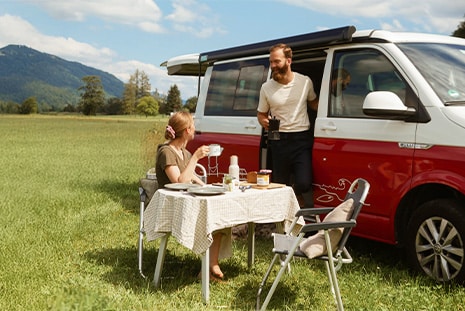
Skip the campground fees without giving up comfort. A roadsurfer camper van gets you to BLM land, national forests, and everywhere in between — with a bed, a kitchen, and a bathroom already built in.
Book Your CampervanTravel smarter with roadsurfer.
Trusted by thousands of travelers worldwide.
✓ Backed by 20,000+ Google reviews
✓ Built for families, couples & adventurers
✓ Inspiration & exclusive deals for subscribers